Obama made sure to bring together the past with the present. Memory stalking the impatiently advancing future. Into the party marched the honour ghosts, the generation of the revolution. A band of colonists rising up against an empire. The generation that had fought world war II. The civil rights generation that had the courage to sit at the lunch counter and brave fire houses and march through Selma and Montgomery for freedoms cause. Everything contemporary seemed infused by history to reach out and back to History for a sense of its own future purpose.
Simon Schama
I wrote a long blog post today in which the past stalked the future. Though a common occurrence for those who follow this blog, it differed as it strayed firmly into the present. A dangerous endeavour at the best of times, but in the current climate - positively suicidal. Not because of the inevitability of trolls or even the wide-eyed acolytes who, with a frenetic rage, seek to burn anything which doesn't bow to their outlook. But because in times such as this, important discussions become subsumed by an emotion which prevents meaningful agonism. And this is largely why I write, to spark discussion. In a climate which largely prohibits this, it is time for this writer to retire from the field and live to post again another day.
In true Hemingway style, today's article remains as a draft, to be reprised when I have the time to more closely argue the case and the prevailing discourse the cool head to meaningfully discuss. And it will surface because it is a case which needs to be argued. Not because the contemporary is infused by history, but because the contemporary has firmly adopted Trump's 'fake news' stance to the historical record. Instead, preferring 'their' understanding and howling sanctimony, sanctimony, at anyone so bigoted as to point to the inaccuracies of their claims. But Cleo, history's muse, is persistent and can't be silenced, no matter how much the mob may wish it so. Thus today is not silence, rather it is discretion. Which the sage knows, is the better part of valour.
Good night, and good luck.
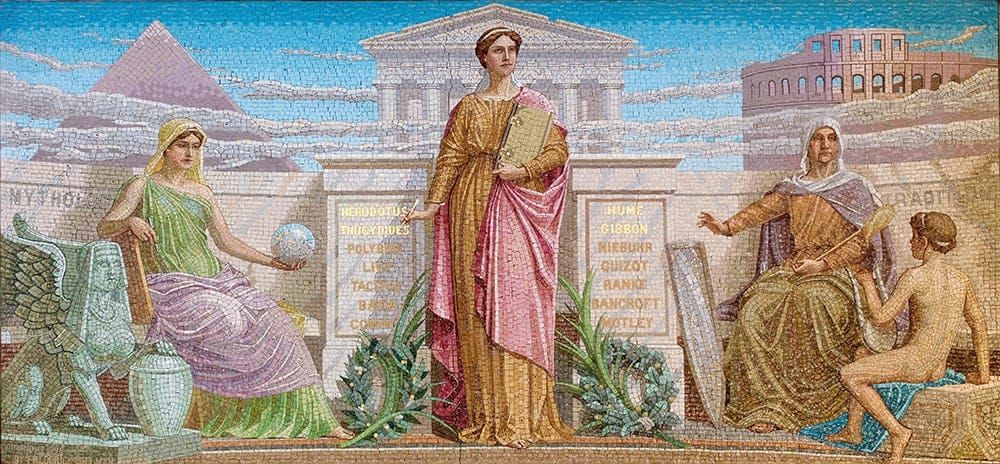
History by Frederick Dielman is licensed under Public Domain.
This post is day 038 of my #100DaysToOffload challenge. If you want to get involved, you can get more info from 100daystooffload.com.