
Good evening, and welcome to this edition of The Scribbler—a newsletter that circles one organisational problem until it shows itself.
This month's thread is simple: too many institutions are mistaking enduring tensions for one-off problems, alignment for coherence, and process for judgement.
But first, a bit of trivia...
Trivia question: In 1991, which organisational theorist framed learning as a tension between exploration and exploitation? Answer at the bottom of this scribbling.
This Edition's Scribbling
Across my writing in March—on polarity mapping, purpose, governance and autonomy, standardisation and innovation, Martin Kearns on Agile's unintended consequences, and the higher-order question of control and empowerment—the same theme keeps returning. Mature leadership is less about choosing a tribe and more about discerning what sort of tension you are actually in, then governing it without panic, theatre, or self-deception.
 Dr Robert N. Winter
Here in Australia, that question lands with unusual force. The Reserve Bank lifted the cash rate to 4.10 per cent on 17 March and explicitly pointed to greater capacity pressures, sharply higher fuel prices flowing from the Middle East conflict, and upside risks to inflation. Budget season is also approaching, with the Federal Budget presented in May. At the same time, Australia's National AI Plan is now moving from announcement to implementation, promising competitiveness, productivity and resilience while also insisting on safety, regulation and public confidence; the new Australian AI Safety Institute has been set up to help assess risks and support compliance. Globally, the OECD says the evolving conflict in the Middle East is testing the resilience of the world economy, lifting energy costs and volatility even as AI-related investment continues to support activity. That is an awkward setting for leadership: one that invites overreaction, centralisation, and the desperate hope that better tools might save us from muddled thinking.
Which brings me to the most useful distinction in the March essays. Not every tension is there to be solved. Some things are problems. Some are trade-offs. Some are polarities. That sounds almost insultingly basic until one remembers how much executive time is spent pretending that planning versus adaptation, governance versus autonomy, or standardisation versus innovation can be "fixed" once and for all, preferably in a workshop with butcher's paper and coloured markers. They cannot. Or at least not in any enduring way. These are paired goods. Over-correct toward one and you eventually buy its downside at full price. Swing back in the opposite direction and you repeat the mistake in reverse. What looks like decisiveness is often just oscillation with better branding.
 Dr Robert N. Winter
That diagnosis matters now because we are living through a season that flatters the urge to lurch. Higher rates, volatile energy markets, geopolitical uncertainty, and relentless pressure to "do something" all reward visible control. Under those conditions, every organisation is tempted to confuse legibility with order. If a metric can be shown upwards, it is treated as evidence of mastery. If a framework produces cadence, it is mistaken for coherence. But March's writing argues for something older and more adult: not vague balance, but disciplined oscillation. Not compromise for its own sake, but a managed cadence that secures the upside of both poles while watching carefully for the early signs of drift. In other words, the task is not to eliminate tension, but to stop being surprised by it.
 Dr Robert N. Winter
That is why the conversation with Abdullah Ramay sits so well inside this month's broader arc. On the surface, a piece about Pablo & Rusty's Coffee Roasters and a cluster of essays on polarity management may seem to be travelling on different tracks. They are not. Abdullah's central point is that purpose only becomes real when it constrains decisions. Profit and purpose are not enemies; they are direction and fuel. That is not a sentimental claim. It is a governance claim. It means authenticity is coherence over time, especially when applause and alignment part ways. It means the real boardroom question is not whether purpose appears in the brand book, but whether it still bites when trade-offs become inconvenient. In a climate saturated with ESG signalling, AI promises, and corporate declarations of virtue, that is a bracing standard. Many organisations still speak as though purpose were mainly about external narrative. Abdullah reminds us that its real test is internal discipline.
 Dr Robert N. Winter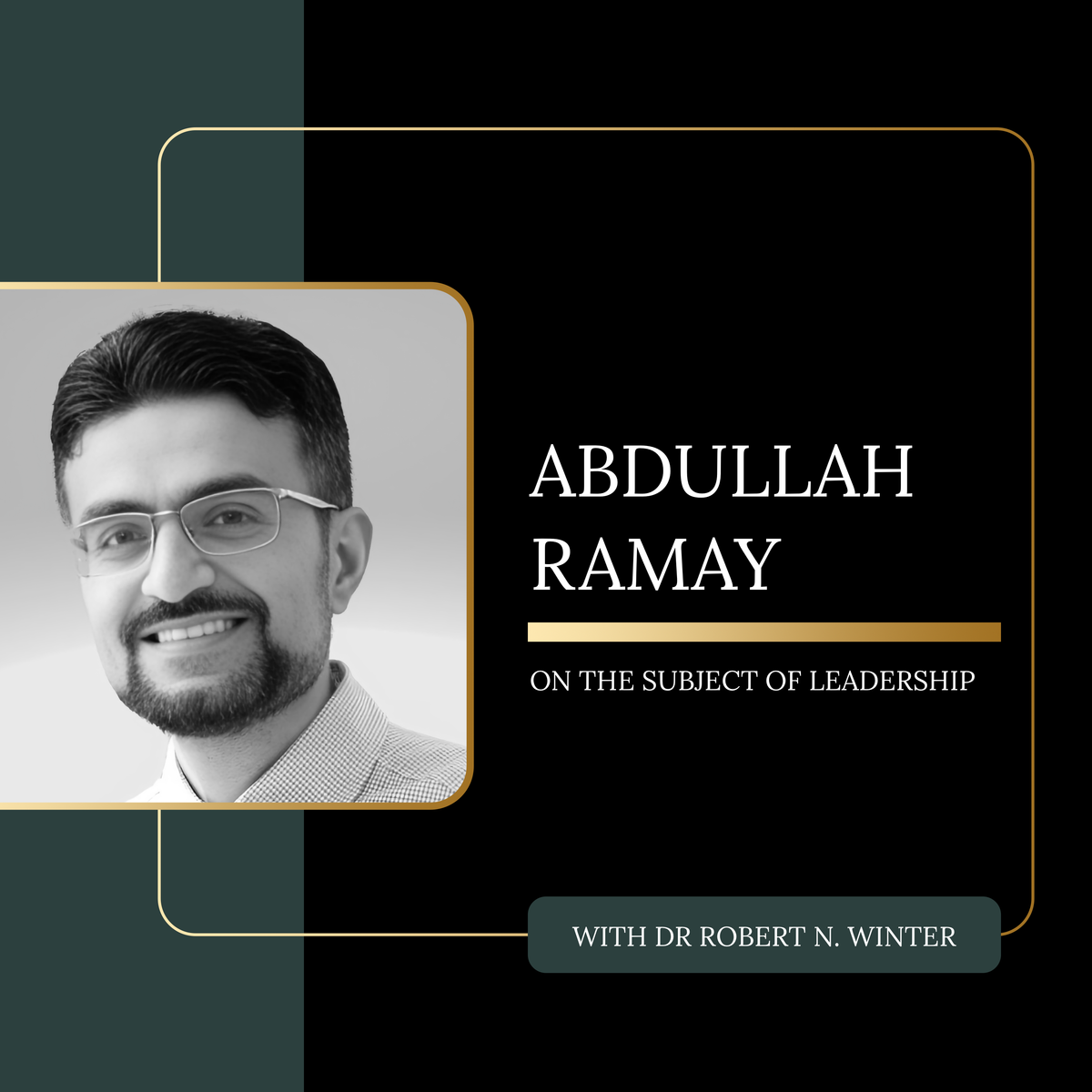
The point becomes sharper when placed beside the March articles on governance and autonomy, and on standardisation and innovation. Both pieces resist the lazy romance of decentralisation just as firmly as they resist the managerial fantasy that enough control can abolish uncertainty. That, to my mind, is where the month became genuinely useful. These essays do not flatter either tribe. They say, in effect, that governance becomes toxic when it forgets the difference between authority and coercion; but they also say empowerment becomes dangerous when it is offered as mood music rather than capability, clarity, and bounded discretion. Likewise, standardisation is not the enemy of innovation. Done properly, it is the architecture that allows innovation to scale rather than remain trapped as local improvisation. Done badly, it curdles into bureaucracy and learned helplessness. The real question is not whether you standardise. It is what you standardise, where, and for whom.
 Dr Robert N. Winter
That line of thought reaches its clearest contemporary expression in the Martin Kearns conversation. Agile, in Kearns's telling, has not so much failed as it has been ritualised. Its principles have been preserved in the way church ruins preserve liturgy: visibly, ceremonially, and often without living conviction. Stand-ups become reporting forums. Sprint commitments become performance contracts. Velocity becomes comparative theatre. A philosophy that began by redistributing authority to those closest to the work ends up generating more observability for those furthest from it. That is not merely an Agile problem. It is a parable of modern management. We adopt the language of autonomy much faster than we adopt the conditions required to sustain it. Kearns's other point is even more timely: technology does not resolve organisational confusion; it amplifies it. That feels like the right sentence for 2026. Australia now has a National AI Plan that tries to hold opportunity and safety together, and that alone is revealing. The polarity is already built into the policy. The question for leaders is whether they will treat AI as a multiplier of judgement or as a substitute for it.
 Dr Robert N. Winter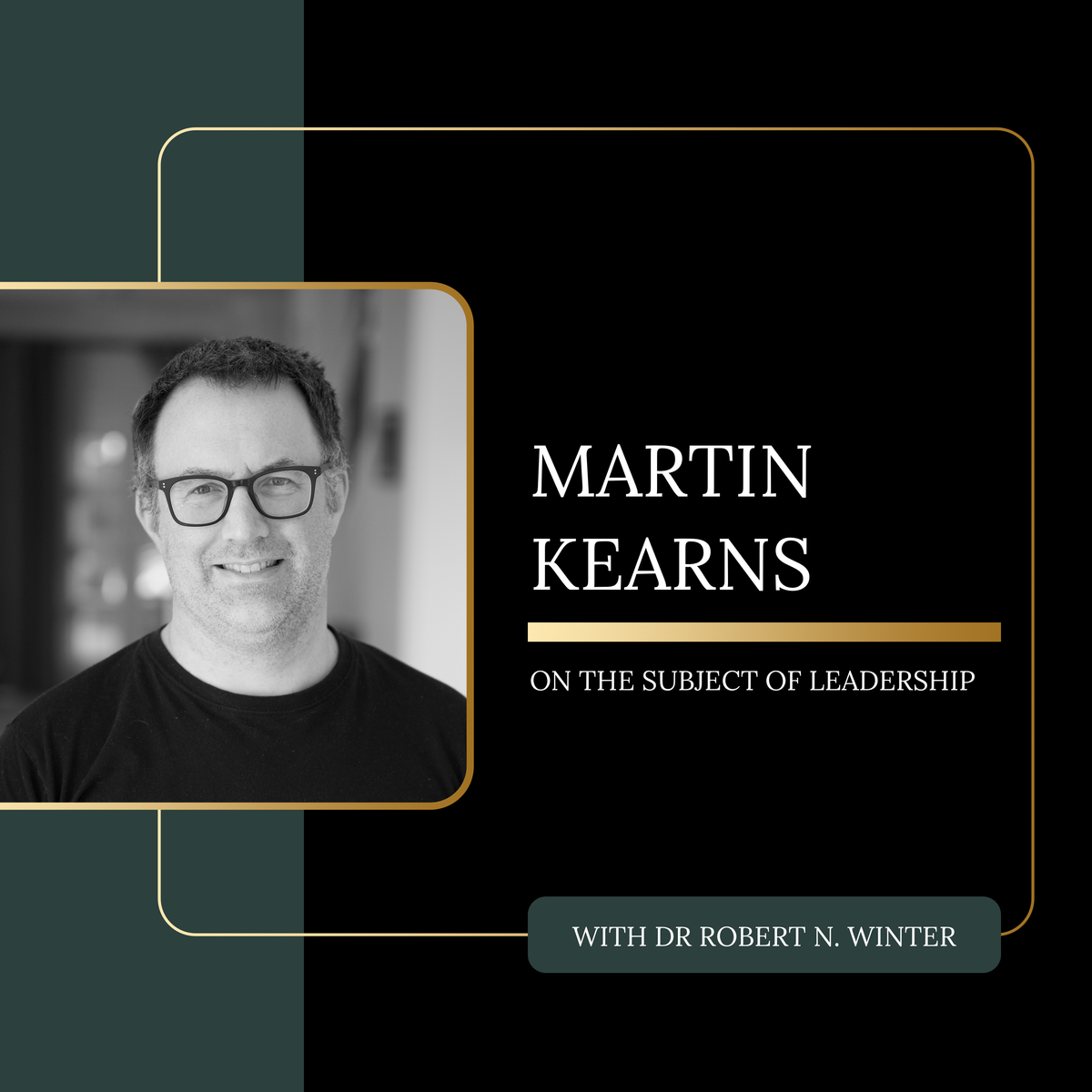
This is why the thread running through March finally comes down to language and authority. The deeper argument in these essays is not really about management technique. It is that control, at its best, must be reasoned rather than merely imposed; and empowerment, at its best, must be scaffolded rather than merely declared. When leadership loses the ability to distinguish authority from coercion, or explanation from instruction, organisations compensate with more process. They grow louder, not clearer. They substitute templates for thought. They perform consultation while narrowing real discretion. In that sense, the concern with reasoned authority and better language is not decorative. It is operational. Leaders will need it more, not less, as the external environment becomes more jumpy.
 Dr Robert N. Winter
So what should readers look out for in April? Not a grand pivot. Something smaller, and more revealing. Watch whether organisations respond to volatility by clarifying judgement or by multiplying ritual. Watch whether Australian firms under rate pressure and budget scrutiny start making harder strategic choices, or merely intensify reporting. Watch whether AI projects are governed as capability-building exercises with explicit boundaries, or launched as symbolic proof of modernity. Watch whether purpose survives first contact with convenience. Watch whether empowerment is matched by competence, decision rights, and support, or whether it is used as a flattering way to distribute risk downward. And finally—watch boards closely: as conditions tighten, many will be tempted either into passivity dressed up as trust or intrusion dressed up as oversight. Neither is stewardship. The RBA's March decision, the looming Budget, and the OECD's warning about energy-price and inflation risks all suggest April will reward tighter thinking, not noisier management.
If March offered a scaffold for April, it is this.
- Diagnose the tension before moralising it. Ask whether you are facing a problem to solve, a trade-off to choose, or a polarity to manage.
- Name the non-negotiables. Boundaries reduce fear when they are explicit.
- Define decision rights with adult precision.
- Standardise the interfaces, not everything inside the box.
- Insist that technology serve clarity rather than conceal confusion.
- Recover the older discipline that management keeps trying to outgrow: reasoned authority.
Give reasons. Expose assumptions. Let disagreement do some useful work. Resist the temptation to make process carry weight that only judgement can bear.
That, at bottom, is what this month's work has been circling. Not harmony. Not perfect balance. Not another framework to add to the pile. Just the more difficult proposition that organisations become sturdier when leaders stop pretending every tension can be solved by willpower, workflow, or software, and start learning how to carry contradictory goods without degenerating into panic, theatre, or drift.
April, I suspect, will reward exactly that kind of maturity.
Good night, and good luck.
Worth Your Time
Art and About

Artist: Paul Klee (1879–1940).
Title: Red Balloon, 1922,
Description: In Red Balloon, Klee paints the entire standardisation-versus-innovation argument in a few stubborn shapes. The city is geometric, disciplined, almost administrative; then comes the balloon, round, bright, unnecessary, and therefore indispensable. It is the sort of thing a transformation office would call an exception and a leader with imagination would call the reason to continue.
This painting fits a month concerned with polarities rather than panics. The essays argue that mature organisations do not choose once and for all between order and experimentation; they build a cadence that protects both. Klee's balloon does not abolish the grid. It humanises it.
The lesson? The job is not to kill the balloon for breaking standards, nor to float the whole city into improvisation. It is to design a place where colour can rise without the scaffolding collapsing.
Medium: oil on muslin primed with chalk.
Dimensions: 31.8 × 31.1 cm.
Red Balloon by Paul Klee is licensed under Public Domain.
Trivia Answer
Trivia question: In 1991, which organisational theorist framed learning as a tension between exploration and exploitation?
Answer: James G. March (1928–2018).
The Death of Socrates (1787) (La Mort de Socrate) by Jacques-Louis David (1748–1825) is licensed under Public Domain.