

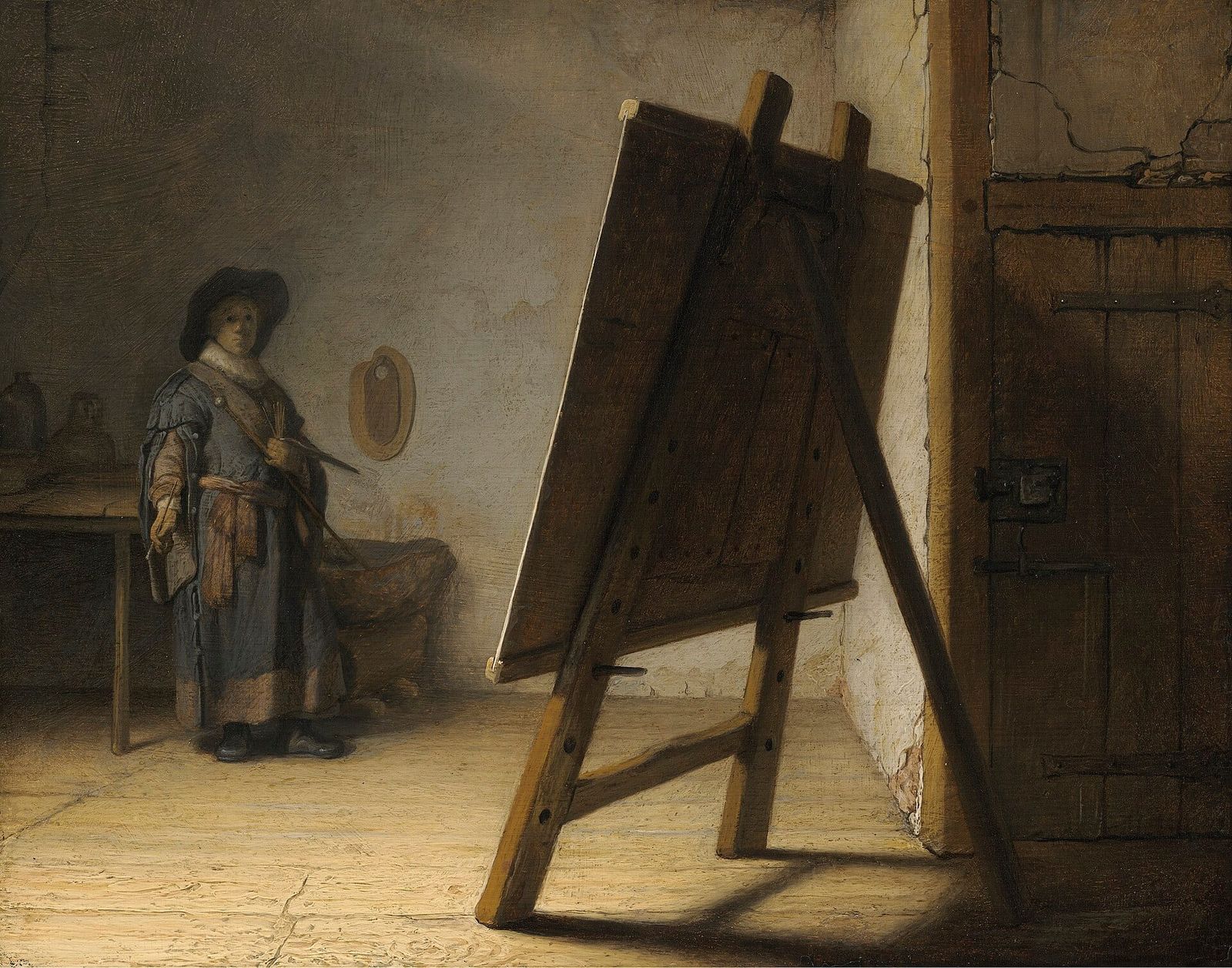

Somewhere in Los Angeles sits a warehouse of screenplays that will never be filmed. Every studio keeps one, literally or otherwise—a graveyard of optioned premises, abandoned sequels, and high-concept pitches that expired quietly in development. The warehouse is a figure of speech, but only just: since 2005 the industry has compiled the Black List, an annual register of the screenplays its own executives most admire and have nonetheless declined to make—more than a thousand titles to date. The supply of ideas in Hollywood has never been the constraint. The supply of films worth watching has. Anyone who has waded through a publisher's slush pile, sat on a grants committee, or emptied a corporate suggestion box knows the same truth in different dress: the world has always been awash in ideas, almost none of them any good, and telling the difference has always been the entire game.
I raise the point because an argument has lately become fashionable, and it is half right in a way more misleading than being wholly wrong. It runs thus. For most of commercial history the idea was the scarce asset; one found the insight, built the deck, raised the capital, hired the team, and executed the plan. Generative AI has made plausible ideation nearly free—a strategy, a business case, a brand identity, a twelve-month roadmap, all before lunch—and so value has migrated from conceiving to executing. The model dreams; the organisation ships, or it does not.
The conclusion is sound. The history is fanciful. Ideas were never the scarce asset. What was scarce, and remains exactly as scarce as it ever was, is the judgement to tell a good idea from a merely plausible one and the craft to turn it into something that stands up. AI has not altered that equation by a single term. It has lowered the cost of producing the plausible to the point where the plausible now arrives in industrial quantities, and so the absence of judgement—which was always the binding constraint—has simply become impossible to overlook.
Grub Street at Scale
The eighteenth century has been here before us. When cheap print and a literate middle class created, for the first time, a mass market for the written word, London produced Grub Street—hack writers turning out pamphlets, puff pieces, and political abuse on an hourly basis, paid by volume and largely indifferent to merit. Alexander Pope (1688–1744) spent much of his career appalled by it, and in the Dunciad (1728–1743) he imagined the tide of mediocrity rising until it extinguished civilisation altogether: his famous closing line has the light of learning guttering out and universal darkness covering all. He was being theatrical. But he had identified something real, which is that when the cost of producing plausible text collapses, the volume of bad text does not merely rise. It threatens to drown the good, because the reader's attention, unlike the supply, remains stubbornly finite.
A century and a half later George Gissing (1857–1903) wrote New Grub Street (1891) about the same phenomenon grown industrial—the conscientious novelist ruined beside the cheerful mediocrity who gives the market what it wants at the speed it wants it. LLMs have automated Grub Street and handed a press to everyone. The result? A deluge of confident, frictionless, faintly empty output that the workplace has learned to call slop. The put-down usually attributed to Dr. Johnson (1709–1784) fits it precisely: the part that is good is not original, and the part that is original is not good.
Slop is not a failure of the technology. It is the technology working exactly as designed, in the absence of the judgement that was always meant to sit on top of it. There is a kind of Gresham's law at work here—bad output driving out good attention—and it bites hardest in organisations that have confused fluency with thought. The deck reads beautifully. The roadmap is internally consistent. The strategy is—perfect. And it is all worth nothing, because no one has exercised the single faculty the machine cannot supply: the discrimination to ask whether any of it is true, and the nerve to say so when it is not.
The Only Mile That Was Ever Hard
Which brings me to the organisations themselves, and to the figures now wheeled out to prove that something has changed. MIT's NANDA initiative reported in 2025 that some ninety-five per cent of enterprise generative-AI pilots had delivered no measurable effect on the bottom line, and the consultancies have produced a tidy maxim to match: AI success is ten per cent algorithms, twenty per cent technology and data, and seventy per cent people and process. These are offered as revelations. However, they are nothing of the kind. It was always clear for anyone grounded in the philosophy of management that once AI models passed a certain point of fidelity, the failure was always going to be how the human in the loop is engaged.
This has been true for every successive technological innovation, from the plough right through to LLMs, the challenge has always been the leaning gap—the inability of organisations to fold the tools into how work is actually done. Success comes from empowering employees and line managers. Strip away the AI vocabulary and this is a finding about management, not about machines.
I have made this argument before, and the AI case is only its most expensive instance. An organisation that buys a superb instrument and hands it to people it has never taught to build, inside a structure that punishes candour and rewards the reassuring narrative, will produce expensive mediocrity rather than cheap mediocrity, and be poorer and prouder for it. The tool does not build the house. The artisan does, and the artisan requires a workshop: clear accountability, competent and adequately resourced middle management, and information that flows upward without being laundered into optimism on the way. None of this is glamorous, and none of it can be bought before lunch, which is precisely why it remains scarce, and precisely why it remains the work.
So I would put the contrarian case more flatly than its proponents do. The last mile is not the only mile that matters now. It is the only mile that was ever hard. Ideation was always cheap—the warehouse of unmade scripts attests to it—and execution was always the discipline that distinguished the institution that could build from the one that merely talked about building. AI has changed the scenery and left the plot intact. It has made the counterfeits of judgement cheaper and more convincing than ever, which means the genuine article is now worth correspondingly more. The organisations that grasp this will spend less of their attention optimising prompts and more of it cultivating the unfashionable human capacity to tell whether the work is any good. The rest will generate their mediocrity faster, at greater cost, and call it transformation.
Good night, and good luck.


Member discussion
The discussion is open to members of the Commons. Join, free, or sign in to take part.