

Good evening, and welcome to this edition of The Scribbler—a newsletter that circles one organisational problem until it shows itself.
This is a double issue. April's edition went unwritten, and I will not pretend the omission was strategic; the months, like the pilots we shall come to, have a way of remaining perpetually almost-finished. What follows therefore gathers a longer run than usual—two months of articles and conversations—which, set side by side, turn out to be about a single thing.
That thing is judgement, and the remarkable variety of counterfeits we accept in its place. An organisation forever prefers the proxy it can see, score, present, and defer to over the judgement it must actually weigh. The grid in place of the person. The diagnosis in place of the candidate. The expensive hire in place of hard won capacity. The dashboard in place of contact with the work. The comfortable narrative in place of the unwelcome truth. The pilot in place of the integration. Each is a way of being spared the act of judging, and each is the subject of one of the pieces below.
This Edition's Scribbling
Here in Australia the setting could hardly be more pointed. On 5 May the Reserve Bank lifted the cash rate to 4.35 per cent—a third consecutive increase this year, carried eight votes to one—and warned of "second-round effects" as higher fuel prices from the Middle East conflict feed through to the price of nearly everything else. A week later, on 12 May, the Treasurer handed down a Budget badged Resilience and Reform and presented, pointedly, as net-saving—$63.8 billion in savings and reprioritisations, a 2026–27 deficit trimmed to 1.0 per cent of GDP, a stated resolve to take the pressure off inflation. And in the same breath: five rounds of tax cuts, a halving of the fuel excise, cost-of-living relief for battling Australians. The honest prescription for inflation is the one no government can read aloud and survive—that bringing prices to heel means people must buy less, defer the renovation, forgo the next holiday. So the Budget offers the cure and the comfort at once, wagered against a future in which the two quietly reconcile; and so long as the proxy is plausible and the audience would rather believe it than hear the alternative, the wager holds. It is the same manoeuvre the rest of this issue keeps turning up, conducted here at national scale. The Bank meets again on 16 June. Between now and then a great deal will be said about fighting inflation while dangling the hope of sparing everyone its impact. A sleight of hand you'll see in management and board meetings every day.
The unweighed claim is the thread, and the cleanest statement of it opened the period.
Hiring a $200 Hammer is the keystone of both months, because it names the master pattern the rest of the writing merely varies. A $200 hammer is a superb instrument—balanced, durable, forged to tolerances its cheaper cousin cannot match. But the hammer does not build the house; the artisan does. Hand a magnificent tool to an organisation that lacks the skill, the discipline and the coordinated practice that good building requires, and it will produce the same crooked wall as the bargain model. Put in organisational terms, this is the belief that exceptional individuals can rescue mediocre systems—an approach I have termed the saviour industrial complex—one of management thinking's more durable superstitions, and it is what drives a board facing difficulty to reach for the exceptional appointment the way a drowning man reaches for flotsam: desperately, and without much scrutiny of its buoyancy. Management search becomes a kind of institutional prayer—the right person, the right aura, and surely a decade of dysfunction will simply dissolve. It is the substitution of confident acquisition for the patient cultivation of capacity, and once you have seen it you will see it everywhere for the rest of this newsletter.
 Dr Robert N. Winter
You see it first, and most personally, in how organisations decide whom to admit. The Person in Front of You takes up the moment in every interview when the conversation stops being about the candidate and starts being about the interviewer's filing system—when the questions shift from "what can you do?" to "what box can we put you in?" The occasion was Janet Albrechtsen's account of a senior public servant asked, in effect, to supply a diagnosis as a condition precedent to employment; the target is broader than the "lived experience" workforce she names. Hiring is genuinely difficult, and proxies are easier: the credential, the demographic, the diagnosis, the keyword match against a rubric finalised before anyone shook hands. The proxy is not assessment. It is the avoidance of assessment dressed in its clothes.
Dr Robert N. Winter
The Case Against Leadership Competency Models gives that avoidance its institutional monument: the laminated poster of twelve boxes—Strategic Thinking, Driving Results, Developing Others—each amenable to a rating and a green or red dot. The frameworks are so obviously sensible at first glance that the question of whether they describe anything real is seldom asked. A chief executive of genuine quality will in all likelihood tick the same boxes as the charlatan who replaces her, because the grid cannot see what distinguishes them. What it cannot see is phronesis—the practical wisdom by which a person of experience perceives what this situation requires, which Aristotle was at pains to distinguish from techne, the skill of making things by rule, and episteme, the textbook knowledge of universals. Technical skill and theoretical knowledge decompose obligingly into lists. Judgement does not; the moment it is reduced to a checklist it ceases to be judgement and becomes a rule, and rules applied to cases they were not designed to fit produce exactly the decisions organisations later commission consultants to investigate. The framework manufactures an appearance of objectivity that misrepresents its own partiality—which is the polite way of saying it is a proxy for the thing it claims to measure.
Dr Robert N. Winter
If the grid is how authority loses sight of the person, distance is how it loses sight of the work. Craig Baker—who spent eighteen months in growth and sales before a customer gap pushed him out of strategy and back into delivery—described in our conversation the structural tendency of leadership to drift upwards. As responsibility grows, proximity to consequence shrinks; authority comes to rest on dashboards, forecasts, and carefully phrased assurances, and the work itself becomes something reported on rather than touched. This is not a moral failing but an organisational pattern, and it carries a cost rarely examined until something breaks. The distance between the promise and the work is the same distance, in another register, as the one between the board paper and the warehouse floor—and, as we shall see, between the executive who has signed the AI strategy and the tool they have never opened.
Dr Robert N. Winter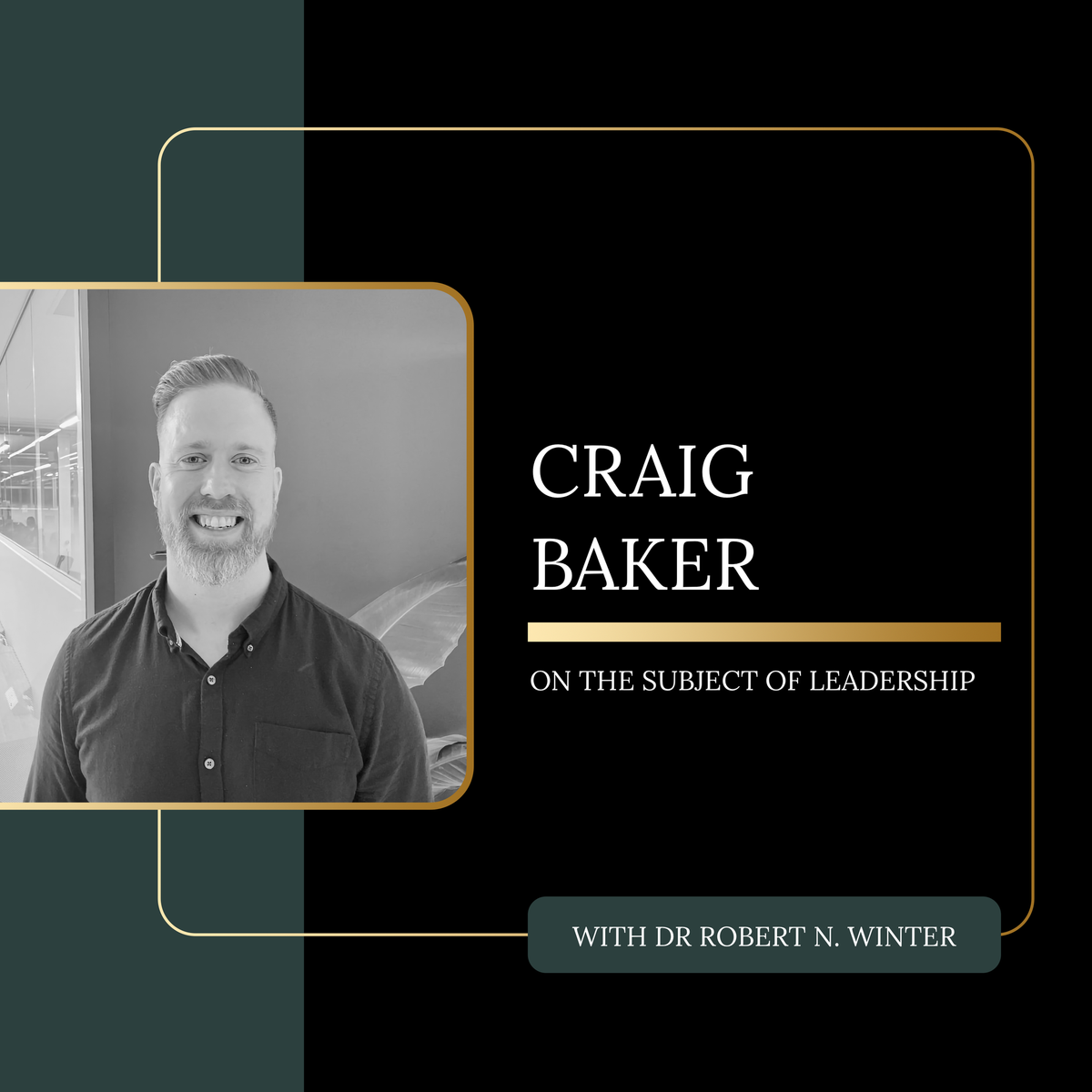
Nowhere is the counterfeit costlier than in the boardroom, and three pieces this period circle it. The Problem With Telling Your Board What They Want to Hear reaches back to Thucydides for the canonical case. Pericles held authority over a democracy designed to prevent precisely such concentration, and he held it because he had earned, across three decades, the standing to contradict the assembly—to reduce it to alarm when it was insolently elated and restore its confidence when it panicked. He told Athens what it needed to hear and survived the telling. When he died, Cleon stepped into the vacuum and did the opposite: he amplified the demos rather than correcting it, and the Sicilian Expedition followed in due course. The flattery that surrounds high-status leaders inflates their judgement exactly as it contracts their exposure to correction—the same mechanism Hayward and Hambrick later found behind the most value-destroying acquisitions. Candour, the piece argues, is not a structural feature but a relational achievement, built in the two years before the crisis, not the meeting in which it breaks.
Dr Robert N. Winter
The Chair's Dilemma shows what its absence looks like from the inside: the papers circulated on the Friday, the deterioration visible to anyone who read them carefully, and the Monday meeting whose minute records "robust discussion" where there was none. This is the ordinary face of board failure—not the malfeasant chair but a room of intelligent, independent directors collectively unable to act on what each privately suspects, each wrongly assuming the others are untroubled. The codes legislate the architecture of the boardroom and have almost nothing to say about its inhabiting; a board can have every box ticked and every committee constituted and still be unable to tell its chief executive that the strategy is failing. What the codes cannot supply is the substrate—the courage to hold the position the room does not yet want to hold. Burke supplies the standard: the director is a trustee of the company's long-term interest, not a delegate of management's mood, the dominant personality, or the social comfort of fellow directors.
Dr Robert N. Winter
That same Burkean trustee closed the polarity series in The Board: Polarities and the Role of the Director, the piece this newsletter promised you in April. The familiar boardroom line—"noses in, fingers out"—points at a real tension but does not tell you how to manage it; it leaves you unable to say when "noses in" is wise oversight and when it is theatre, when "fingers out" is restraint and when it is abdication. Polarity mapping earns its place at the board not by turning governance into a workshop but by giving directors a disciplined way to do what boards are structurally designed to do: hold interdependent opposites in productive tension over time. Which is to say that oversight, properly understood, is not a posture to be performed but a judgement to be exercised—the very faculty the rest of this issue keeps finding in short supply.
Dr Robert N. Winter
Nick Hassett supplied the operational corollary. A board session ends in apparent consensus; everyone leaves ostensibly aligned; and then each returns to their function and does something different. He calls it alignment that is only room deep, and its consequence is that when the indicators misbehave the board interrogates the strategy, when in truth the strategy was never implemented—what was tested was the organisation's willingness to execute it. His most useful question to a new client is the one that produces bewilderment: what is my exit strategy?—not how he will leave, but how success will be defined and measured before anything is done. Most organisations cannot answer it. They are fluent in activity and inarticulate about outcomes, which is judgement's counterfeit in its purest form: motion mistaken for direction.
Dr Robert N. Winter
All of which brings us to the largest and most expensive counterfeit now on offer, and to the four pieces that close the period. Nine Years, One Number assembles the AI evidence longitudinally and lets it settle the question. Nine years ago MIT and the Boston Consulting Group found one company in twenty had meaningfully incorporated artificial intelligence. Last month Deloitte reported jubilation—record confidence, soaring investment, three-quarters of firms intending to deploy autonomous agents within two years—and then conceded, a few pages on, that twenty per cent are growing revenue through it, twenty-one per cent have a mature model for governing those agents, and eighty-four per cent have not redesigned a single job around the technology. McKinsey's figure is bleaker still: six per cent qualify as genuine high performers, a number that has, if anything, fallen since 2019. The models have moved through several generational shifts; the returns have not moved at all. The executives who told me the surveys were stale because "AI moves too fast" were not wrong about the speed of the models—only about which speed matters. This is the half-lie, and it deserves its Trollopean ancestor: Augustus Melmotte, whose great railway was never a railway but a sequence of prospectuses and confident dinners. Trollope was not interested in the prussic acid at the end; he was interested in the dinner—long, ceremonious, attended by men who had known for months what was coming and elected, for reasons of social comfort, not to say so. The dinner, in the AI sense, is still being served.
Dr Robert N. Winter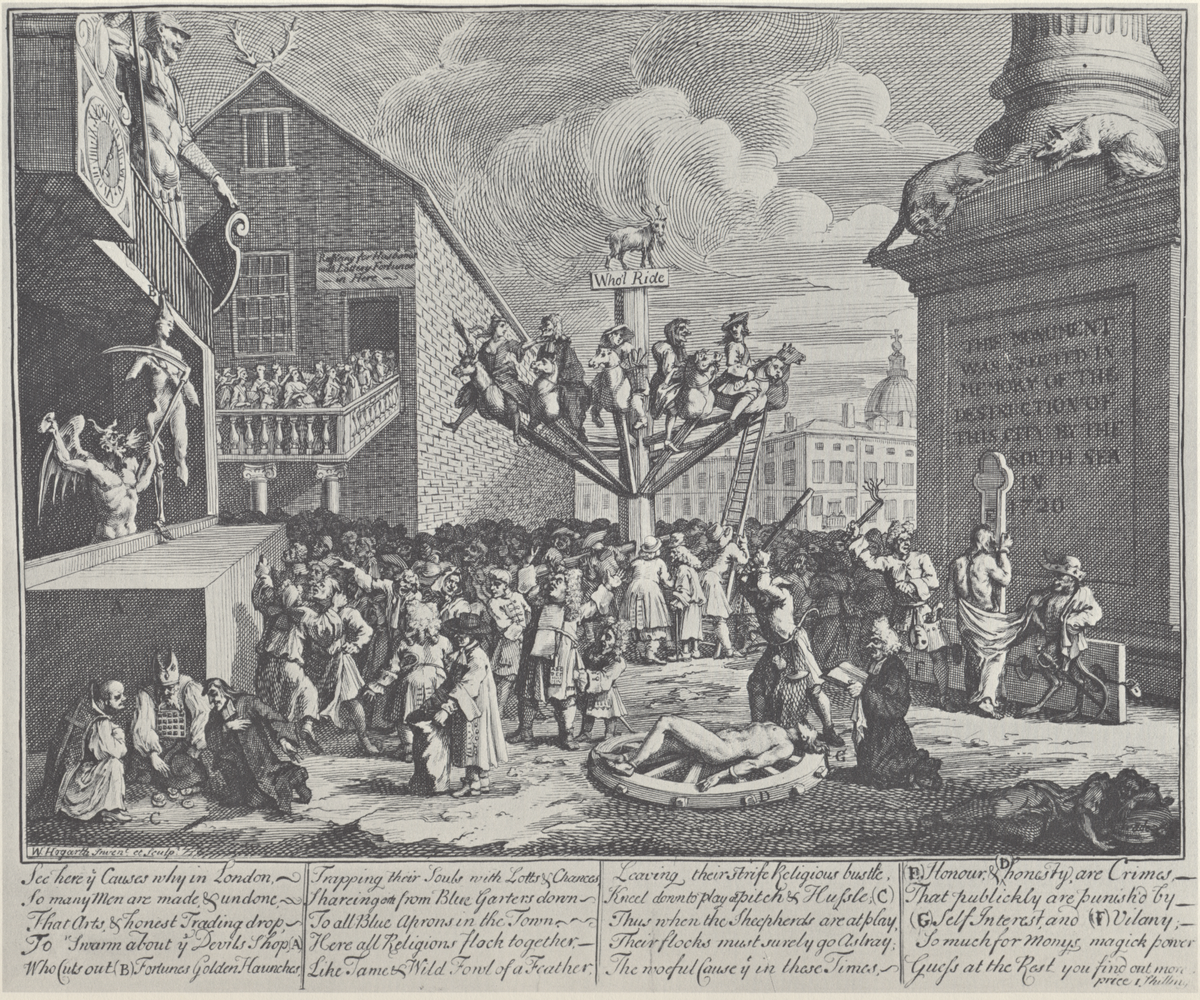
The Permanent Pilot names the mechanism. A quarter of organisations have moved their AI experiments into production; just over half expect to within three to six months—a prediction that has appeared, in some form, in every major survey for nine consecutive years. That "three to six months" is not an interval of the earth circling the sun but a managerial interval: imminent, expected, and forever a quarter away, far enough to escape accountability and near enough to keep the promise alive. Homer understood the device. Penelope wove the shroud by day and unravelled it by night; the work was real, the weavers were not idle, and the only thing that never happened was the thing that had been promised. Cohen and Levinthal explained the deeper trouble thirty-six years ago: an organisation can absorb new technology only to the extent that it already possesses the related knowledge to integrate it—and the data discipline, governance maturity and cross-functional accountability that AI demands are exactly what most organisations have spent a decade not building. The pilot is not the beginning of integration. It is what an organisation does when it cannot yet integrate.
Dr Robert N. Winter
The two practitioner conversations sharpen the same edge from inside the work. Pascal Uerlings, who has run more than a hundred implementations at J4RVIS, puts it bluntly: most AI initiatives fail not because the pilot underperforms but because it succeeds on its own terms—clean data, controlled environment, dedicated team—and then proves non-translatable to a production world where the data is messy and the change-management work was never resourced. Define the production-state metric before writing any code; name a single accountable owner from day one; accept that the model is no longer a stable artefact. Clare Kitching, lately of McKinsey and now in the unsentimental environment of small-business advisory, supplies the line that belongs on every board agenda: you cannot ask the machine to make your business grow, because the answer, if it exists, has not been written down yet. AI is overwhelmingly an exploitation technology—it accelerates the production of outputs resembling those it has already seen—and the genuinely strategic work is precisely what it cannot do for you. Her single most discriminating question, and the one that closes the loop opened by Craig Baker, is not technical at all: are you using it yourself, day to day? The leader who has logged in, however unevenly, has acquired a small and irreplaceable form of operational knowledge. The leader who has not is refereeing claims they cannot verify, on borrowed conviction.
Dr Robert N. Winter Dr Robert N. Winter
If that sounds like a counsel of despair, it is the opposite, and the cure arrived in the middle of May dressed, characteristically, in eighteenth-century clothes. Move Slow and Fix Things recovers Edmund Burke—not the cartoon reactionary but the energetic reformer who prosecuted the East India Company and held that a state without the means of change is without the means of its conservation. His quarrel was never with reform but with a particular style of it: the conviction that the inherited apparatus must be destroyed before anything new can be built. The disruption industry has prescribed exactly that, and the result, as the change literature has documented since the early 1990s, is that most large transformations fail to deliver their stated objectives and a good many destroy the fabric on which the unstated ones depended. The leaders who do this well are seldom celebrated, because their work is not photogenic. They do not break things; they fix them, room by room, while the business continues to operate, earning the authority to make consequential changes by first making minor ones competently. Burke would have recognised them. So, for that matter, would Chesterton, whose reformer is not permitted to pull down the fence until he can say why it was put up.
Dr Robert N. Winter
So two months resolve into one proposition. The silver-bullet hire, the competency grid, the proxy interview, the dashboard-distant leader, the comfortable boardroom silence, the half-lie about which speed matters, the permanent pilot—these are not separate failures. They are the same failure in different vocabulary: the substitution of something legible for the act of judgement it was meant to replace. None of them is stupid. Each is easier than the thing it counterfeits, which is precisely why it endures. And the cure, in every case, is older and less glamorous than the disease: weigh the particular case, stay close to the work, build the capacity rather than buy the tool, and say what is actually happening to people who have been prepared, in advance, to hear it.
Looking to June
What should readers watch for? Not a grand pivot—something smaller, and more telling. Watch whether the Budget's productivity language survives contact with the June-quarter inflation print and the Reserve Bank's 16 June meeting, or whether "productivity" quietly reverts to meaning whatever the speaker needs it to mean. Watch whether firms under rate pressure clarify judgement or merely intensify reporting. Watch whether AI is governed as a capability with named owners and explicit boundaries, or performed as proof of modernity in the annual report. And watch the boards: as conditions tighten, many will be tempted into passivity dressed as trust or intrusion dressed as oversight, and neither is stewardship.
If two months offer a scaffold for June, it is this.
- Build the capacity, do not merely buy the tool. The hammer does not build the house, and the exceptional hire does not redeem an organisation that cannot use good people well.
- Judge the person in front of you, not the proxy. Credentials, diagnoses and competency grids describe what is easy to score, not what determines whether someone can do the work.
- Stay in contact with the work you authorise. Authority that rests only on dashboards has drifted from consequence—and the leader who has never felt the coal face is governing on borrowed conviction.
- Earn the authority to say the unwelcome thing before you need it. Candour and trust are two sides of the same coin and are built in the years preceding the crisis, not the meeting in which it breaks.
- Define success before you begin. Ask what the exit looks like, who owns it, and which operating budget the pilot moves to when it leaves the slide deck.
- Reform rather than replace. Ask why the fence is there before you take it down; the practice you cannot explain may encode information no one bothered to write down.
That, at bottom, is what these two months have been circling. Not a new framework to add to the pile—frameworks are largely the problem—but the more difficult proposition that institutions grow sturdier when their leaders stop reaching for the legible proxy and resume the unphotogenic work of judgement.
Part III of the AI series—The Theatre of Transformation—follows in June, with Gogol as its presiding spirit; Part IV closes the account by reconciling three numbers that refuse to balance. The essay on what I have come to call the saviour industrial complex sits behind all of it, and will arrive when it is ready rather than when it is almost ready.
Good night, and good luck.
Woman Holding a Balance by Johannes Vermeer (1632–1675) is licensed under Public Domain.


