Good morning, and welcome to this edition of The Scribbler.
Trivia question: In 1813 Jane Austen first published one of her most loved books. What was its title? Answer at the bottom of this scribbling.
This Edition's Scribbling
Instead of a new column, this week I am surfacing something from the archives—a selection of articles about privacy. The motivation is that today (January 28) is Data Privacy Day. An international awareness event that was initiated by the Council of Europe (not to be confused with the European Council) back in 2008.
This date was chosen because on January 28, 1981, the Council of Europe proposed 'Convention 108'; the first internationally binding agreement to protect personal data and could be considered a precursor to, or inspiration for, the General Data Protection Regulation (GDPR).
Since 2008, various organisations, both governmental and non-governmental, educational institutions, companies, and individuals use this opportunity to make a case for privacy and to elucidate the inherent dangers of systematic data collection by tech corporations and government agencies.
But why mark the day? For one thing, privacy is a basic human right through Article 12 of the Universal Declaration of Human Rights, which states:
No one shall be subjected to arbitrary interference with his privacy, family, home or correspondence, nor to attacks upon his honour and reputation. Everyone has the right to the protection of the law against such interference or attacks.
—Universal Declaration of Human Rights.
that's valuable and worthy of protection. For another, it is an important corner stone of democratic societies. And last but not least, there's simply no way of knowing what kind of inferences can be drawn about individuals in the future by means of the tremendous amount of collected user data in conjunction with new technologies such as artificial intelligence.
Article Selection: Privacy
Thunderous Ambivalence
Because being off the grid is next to impossible in many societies, it is tempting to give up and proclaim 'I have nothing to hide'.
Categories: Privacy
 Dr Robert N. Winter
Acting for Privacy - An Australian Story
There is the case to be made that this is not only the cost of doing business in the digital age but that, like environmental protections, there are great rewards to be reaped in improved quality of life.
Categories: Business & Strategy, Privacy
 Dr Robert N. Winter
The Subjective Nature of 'Nothing to Hide'
Whether you have something to hide has far more to do with who is looking than what they can see.
Categories: Ideas & Culture, Privacy, Society & Politics
 Dr Robert N. Winter
Art and About
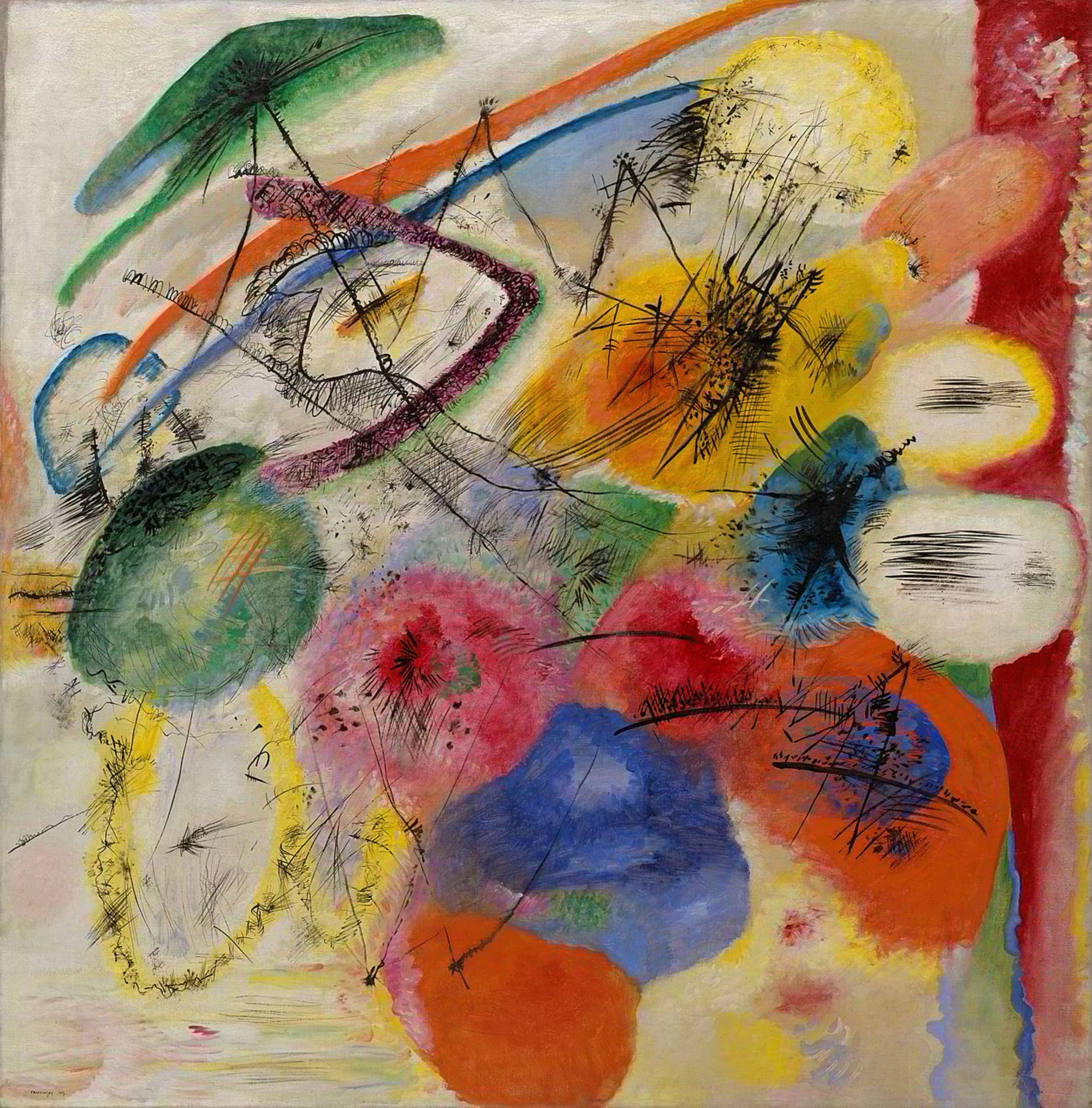
Kandinsky's 'Schwarze Linien' (Black Lines), painted in 1913 is one of the earliest truly abstract paintings in art history. In what is classified as a non-objective work, Kandinsky (1866-1944) sought to elicit responses from a viewer through interrelated shapes, colours, and lines.
His vision was that such abstract works would be universally accessible statements, in a way the more classical forms of art were not; requiring as they do the viewer to possess "a knowledge of" to understand and interpret a work.
Medium: Oil on canvas
Dimensions: 130.5 x 131.1 cm.
Image © 2023 Artists Rights Society (ARS), New York/ADAGP, Paris.
Trivia Answer
Trivia question: In 1813 Jane Austen first published one of her most loved books. What was its title?
Answer: Pride and Prejudice.
Additional Trivia: My wife has made me sit through every television and film adaptation (multiples times). The 1995 BBC edition is perhaps the definitive in my book.
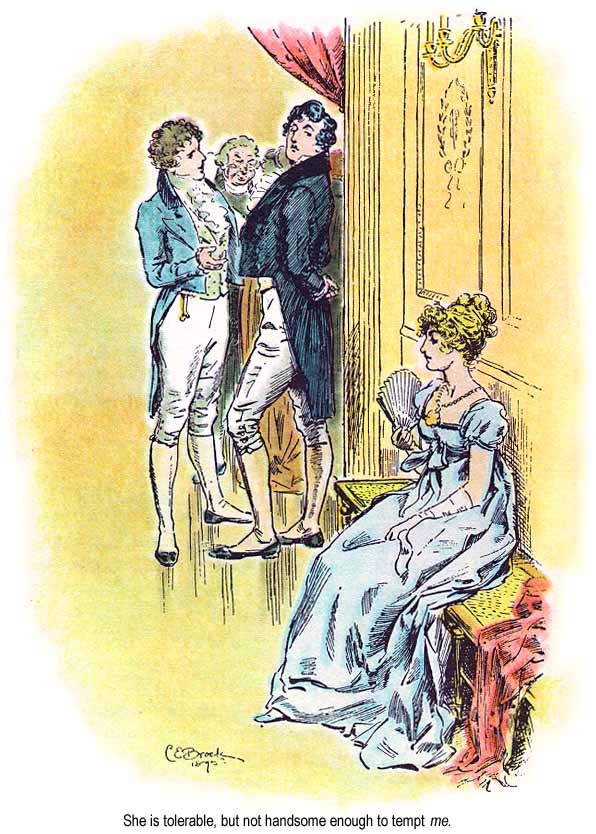
Detail of a C. E. Brock illustration for the 1895 edition of Jane Austen's novel Pride and Prejudice (Chapter 3). 'She is tolerable, but not handsome enough to tempt me.'
Mr. Darcy and Elizabeth Bennet by C. E. Brock is licensed under Public Domain.