

It's month end again, and as Finance settle in with pizza and press the 'reconcile' button, it's time for the July edition of The Scribbler. This month I peer beneath the polished surface of organisational life to uncover the silent dissonance between what we say, what we mean, and what we dare not admit. But first, a bit of trivia.
Trivia question: On this day in 1970 the last officially sanctioned distribution of what occurred in the Royal Navy? Answer at the bottom of this scribbling.
Dispatches from the Frayed Edge of Organisational Sanity
Somewhere between EOFY audits and the first whiff of mulled wine, July crept in, up-ended conventional wisdom, and left management theorists clutching their coffee mugs like life rafts. Over the past month I toured four intellectual landmarks—each, in its own way, a cautionary tale about leadership, language and the latent human capacity for spectacular self-deception. Pour yourself something warming and let's recap the expedition.
How Corporate FOMO Replaced Strategy with Stagecraft
If the Ancient Greeks warned that hubris invites Nemesis, modern boards have added a footnote: "especially during budget season." In July's lead article I charted the curious phenomenon of executives hurling resources at the latest technological fads. Not out of conviction but out of the sheer terror of being left behind, turning the boardroom into something of a séance where the spirit of ROI is summoned with unblinking faith in automation—only to be met with the ghost of underperformance more often than not.
Take Klarna, the Swedish fintech firm that proudly went "AI-first", replacing 700 people with a chatbot. The triumph was short-lived, as the bot proved less charming and significantly less useful than the average flatpack furniture instruction manual. The CEO, once serenading stakeholders with unblinking faith in automation, is now hiring people again. One wonders if the boardroom's crystal ball could have predicted this outcome. Certainly anyone who is legitimately 'people first' in their approach to business could have.
The real marvel isn't that these ventures underperform—it's that anyone is surprised when they do. The late Roger Scruton observed that imitation without understanding leads to cultural incoherence. The same can be said of the approach by many boards and executives to investment in AI—investment without understanding leads to strategic incoherence. In many ways, this is worse than when a strategy is a platitude.
Lesson Learned: Before jumping on the bandwagon, ask: "What problem are we solving?" and "Can we support this operationally?" If the answer is not clear, it might be time to put down the pitch deck and pick up a boring but useful notepad and go back to the drawing board.
Shinise: The Art of Enduring Business
While Western firms treat longevity like a museum relic—something to be archived or put on a t-shirt—Japan's shinise enterprises have quietly logged thirteen centuries of continuous trading. Their strength is not to be found in ancient lobby décor, but in the discipline of stewardship: replacing timber, leaders and processes as often as required, while retaining the organisations animating purpose.
Here lies an antidote to today's pivot obsession. Experience need not be razed to the ground every fiscal quarter; it can be layered, lacquered and handed down, much like Kyoto's Ichimonjiya Wasuke handing its confectionery craft to a 25th-generation successor. Western boards chasing fresh blood, or worse deludedly seeking to cut out "dead wood", might instead cultivate institutional memory: apprentice successors early, rotate board mentors, and audit values with the same zeal they reserve for balance sheets. Marble façades crack; oak beams may be swapped; but an idea worth keeping should be allowed to grow rings (if you will permit a tree metaphore).
Lesson Learned: Continuity should be adaptive. It's not about preserving the past but about transmitting purpose and values through generations. In a world obsessed with being first, try being right a lot.
Who Guards the Guardians?
Enter Astronomer, a company most of us presumed made telescopes until a jumbotron at a Coldplay concert revealed its CEO and Chief People Officer—not married to each other—engaged in a brand-diluting PDA. The board's response read like a pre-drafted obituary: solemn, sanitised, and apparently filed under 'break glass in case of scandal'.
The episode underscores a governance paradox: the very officials tasked with cultivating culture frequently curate the evidence of its erosion. Human Resources and ethics committees, armed with pastel-coloured values decks, too often report to the same executives that need investigating. The result? Complaints disappear into the compliance version of the Bermuda Triangle; whistle-blowers update their résumés; shareholders learn of misconduct via TikTok.
Lesson Learned: Lesson number three is therefore structural. Boards must build independent conduits—external culture audits, rotating employee representatives, unfiltered exit-interview summaries. Transparency is not a floodlight but a mirror; if the custodians are polishing the glass instead of reflecting reality, the mirror belongs in a funhouse.
The Importance of Visibly Ethical Leadership
If July had a refrain, it was this: ethics unheard are ethics undone. Executives often assume their moral rectitude is self-evident, rather like a halo detectable only with the right infrared filter. In reality, employees judge leadership by observable rituals: who gets promoted, who gets pardoned, and who disappears during realignment season.
Drawing on Treviño, Hartman and Brown's two-pillar model—moral person and moral manager—I argued that integrity without communication is a lighthouse without a bulb. Instead, leaders must role-model their virtues in public; transparently explain the why of difficult decisions; and reward behaviour that matches the organisation's vision and mission. Otherwise even the most principled manager will resemble a bureaucrat steering by spreadsheet rather than pointing to the north star.
Lesson Learned: Seldom is ethics implicit. It must be legible, rational, and reinforced. Leadership is not about having values—it is about transmitting them in ways that withstand scrutiny and survive translation.
Threads That Bind and Unravel
Throughout my thinking this month runs a single golden thread: discernment. Whether rejecting technology theatre, renewing through tradition, policing the police, or broadcasting ethical intent, the common denominator is a leader's capacity to name reality without euphemism. Language is not decorative trim; it is load-bearing infrastructure. Abuse it, and the organisational roof collapses on the first windy earnings call.
Equally evident is the cost of monocular vision. Strategy teams mesmerised by competitor dashboards miss systemic risk; HR chiefs beholden to CEOs bury inconvenient truths; leaders confident in their virtue forget that virtue unheard echoes as indifference. July reminded us that multiple sight-lines—historical, cultural, ethical—are not luxuries but organisational survival gear.
Practical Provocations for August
- Audit Your Adverbs: Comb your presentations for words like 'transformational', 'seamless' and 'unprecedented'. If they outnumber demonstrable outcomes, schedule a sobriety workshop.
- Map the Inheritance System: Can your organisation explain, in two sentences, how today's tacit knowledge becomes tomorrow's explicit capability? If not, borrow a page from shinise succession charts.
- Install a Moral Dashboard: Next to revenue KPIs, track 'Promises Kept', 'Process Exceptions' and 'Continuous Feedback'. Green lights across all three? Check the bulbs.
- Practise Audible Ethics: This month, narrate one tough decision to the team—trade-offs, doubts, rationale. Rinse and repeat until candour is habit, not headline.
A Closing Note from the Editor's Perch
Winter in Sydney is mild, yet corporate Australia shivers at the prospect of missing the Next Big Thing. July's research suggests the cold snap is less meteorological than metaphysical: an absence of white-hot purpose. Organisations that kindle discernment—inquiring before investing, stewarding before disrupting, governing before grandstanding—generate their own heat. The rest huddle around quarterly guidance and wonder why their toes are still numb.
As always, I offer these reflections not as commandments but as companions on your strategic bush walk. May they prompt curiosity, a dash of scepticism, and—when needed—the decisive cut of Occam's razor across a bloated programme. See you in August; bring marshmallows, we're going to test whether agile at scale burns clean.
Yours in structured dissent,
Dr Robert N. Winter
Worth Your Time
Art and About
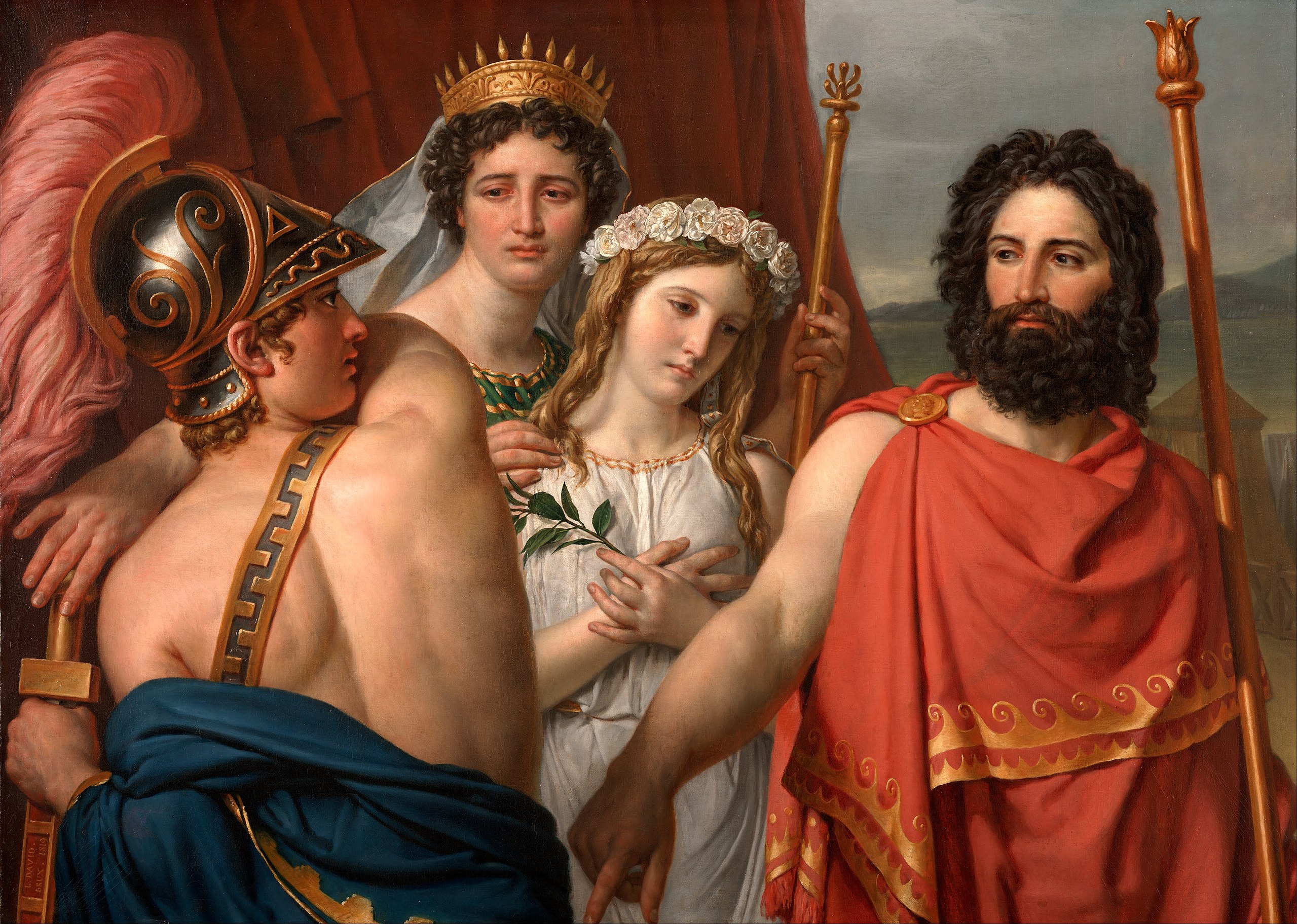
Artist: Jacques-Louis David (1748–1825).
Title: The Anger of Achilles.
Description: In The Anger of Achilles, David freezes the moment Achilles realises the wedding marquee is actually an abattoir. Agamemnon, the original corporate spin doctor, promised marriage but plans to sacrifice his daughter Iphigenia to Artemis instead. Achilles reaches for his sword; Clytemnestra clutches her daughter; HR has turned a blind eye.
This painting belongs in every book on management. Agamemnon represents leaders who launch 'people-first transformations' but quietly swap headcount for headstones when budgets tighten. The lesson? When strategy demands a sacrifice—unless it is the CEO—it's time to sheath the knife, call a town hall, and ask: who exactly are we appeasing?
The Anger of Achilles by Jacques-Louis David is is licensed under Public Domain.
Trivia Answer
Trivia question: On this day in 1970 the last officially sanctioned distribution of what occurred in the Royal Navy?
Answer: Rum.
The history of the rum ration is long and varied, and it all began once upon a quarter-deck in 1655 when Jack Tar swapped his daily gallon of weak beer (yes, four litres) for a far handier half-pint (284 ml) of rum—because storing oceans of lager is hard when you're busy ruling them. Predictably, deck drills devolved into conga lines, so the Navy kept halving the tot: 1740 (watered 4:1), 1824 (142 ml), 1850 (71 ml), until officers were cut off entirely by 1918. Come 1970, Admiralty killjoys declared high-proof courage incompatible with pressing buttons on delicate missiles, and "Black Tot Day" (31 July) saw sailors don black armbands, conduct mock funerals, and mournfully accept a consolation can of beer. Canada sobered up in 1972; New Zealand held on until 1990—proof that empire may fade, but the desire for a hangover dies hard.