
More than one quarter's earnings report has been delivered since my last scribbling, and in that time the world has continued its steadfast commitment to offering those who think about leadership a smorgasbord of material. I've spent the last three months writing about trust, authorship, hiring, data, AI sycophancy, organisational geometry, and the quiet erosion of judgment in the age of the machine. Themes that, taken together, trace a single line through the fog: the recovery of authority in a century that keeps trying to outsource it.
But first, a bit of trivia
Trivia question: On this day in 1874, which future British Prime Minister was born—later known for his defiant wit, prodigious writing, and occasional ability to hold a nation together by sheer force of oratory? Answer appears at the bottom of this Scribbling.
Dispatches from the Frayed Edge of Organisational Sanity
Across eleven essays, one motif kept resurfacing: the danger of mistaking fluency for understanding, authoritarianism for authority, process for reasoning, and momentum for competence. Each article offered a different angle on the same structural problem—the slow drift away from discernment.
Think of this edition, then, not as a recap but a map: the terrain of leadership as it now appears from above.
Organisations fail not because they lack information, but because they lack the judgment to interpret it.
1. The Forgotten Profession of Managing People
The quarter opened with Managing People Isn’t a Side Hustle, Time to Re-Professionalise Management, which made the entirely uncontroversial observation that organisations keep promoting technical specialists into people management roles without providing training, clarity, or structure. The casualties—both human and financial—are predictable.
Management is a craft. It needs apprenticeship, not accident.
2. Sycophancy, Summaries, and the Slow Death of Thought
AI has not just changed how we reason; it has changed how we read.
Two essays tracked the consequences:
- AI Sycophants, How To Stop Your Model From Kissing Up explored how models learn to flatter rather than challenge—a digital version of Burke's warning against praise without counsel.
- No-Click Reading - How AI Summaries Starve Critical Thinking lamented the rise of synthetic digests and the slow abandonment of primary sources.
The common enemy is intellectual malnutrition: diet summaries, performative insights, and organisational habits that reward speed over scrutiny.
3. Trust Before Data, Always
In Why Trust Matters More Than Data in Decision-Making, I argued—drawing on Wittgenstein and Kahneman—that belief flows from trust long before it flows from facts. This isn't cynicism; it's anthropology. No dashboard can rescue a leader whose credibility is threadbare, and no dataset can override a team's settled sense of whether someone is reasoning in good faith.
Here lies the urgent implication for executives: before asking for alignment, repair the hinges of trust that make alignment possible.
4. Hiring in an Age That Worships Signals
Two essays—Lessons from Bach, Rethinking Modern Hiring Practices and The Creator vs. the Passenger, Rethinking Recruitment in Charities—examined the modern hiring dilemma. From Leipzig's near-miss with Bach to boards seduced by halo-brand executives, the pattern is depressingly stable:
- We overvalue signals.
- We undervalue judgment.
- We conflate momentum with competence.
- And we mistake procedural polish for substantive capability.
The quarter left me with a sharper conviction than before: organisations must recruit for creators, not passengers; for scar tissue, not logos. Momentum can disguise mediocrity. Scarcity reveals whether someone can lead without the wind at their back.
If you want to know who can build, ask what they created when nothing existed but need.
5. The Geometry of the Firm Is Distorting
In AI Is Changing the Structure of Organisations, The Future Is a Rhomboid I suggested that the old metaphors—the pyramid, the obelisk—no longer capture the shape of institutional life. Instead, we have drifted into the rhomboid organisation: angled, unstable, and slightly absurd.
The point wasn't aesthetic. When authority flattens and decision-making leans diagonally into dashboards, noble language gives way to procedural control. People cease answering for their choices because "the model recommends".
This quarter clarified a principle I suspect will define the decade:
Leadership is the art of translating outputs into accountable arguments.
6. Rebuilding the Infrastructure of Thinking
Trust in the Age of the Machine and Which Humans? Whose Values? The Cultural Biases of AI followed that thread into the domain of judgment. We trust people—and technologies—not because their outputs are perfect but because their reasons are intelligible. AI muddies this: surface polish hides depthless grammar; fluency masks epistemic thinness.
A recurring danger I traced through these essays is that organisations now treat AI-mediated reasoning as if it were a neutral oracle. It isn't. As I argued, the models tend toward WEIRD bias, institutional sycophancy, and preference-shaped error. Trust collapses when judgment is replaced by imitation.
"In every domain, we are outsourcing the struggle from which real agreement emerges."
7. The Return of the Author
I ended the quarter with Authorship in the Age of AI, a piece that argued—perhaps unfashionably—that writing still requires a mind prepared to stand behind its reasoning. Machines can offer phrases; only a human can offer grounds. Authority, as Friedrich reminded us, is "reasoned elaboration", not the mere act of generating text.
The point generalises beyond writing. Much of organisational life now involves people defending outputs they neither scrutinised nor authored. The loss is not literary; it is ethical. When no one owns the reasoning, no one owns the consequences.
Practical Provocations for December
Before your next decision, name the non-negotiables your reasoning presupposes.
- Pause before asking AI anything. Ask yourself what reasoning you hope it will accelerate—not replace.
- Test your hiring instincts. Prefer scars over sheen.
- Re-professionalise management. Treat it as a discipline, not an appendix.
- Resurrect deep reading. Click through. Read the source. Your brain—and mine—depend on it.
- Reward contradiction done well. Make disagreement a deliverable, not a disruption.
A Closing Note from the Editor's Desk
This quarter felt like watching organisations rediscover an old truth disguised as a new problem: judgment cannot be automated, delegated, or summarised. It must be practised—publicly, rigorously, and often with discomfort.
As the judgement of history teaches, when institutions falter designing people rush in. But the inverse is also true: when institutions recover the habits of discernment, opportunists lose their footing and good governance can flourish.
My hope is that the themes from this quarter—authorship, trust, capability, clarity—offer a small antidote to designing people.
Thank you for reading, thinking, and occasionally disagreeing with me. It keeps the writing honest. And it keeps the work alive.
Until next month, yours in structured dissent,
Dr Robert N. Winter
Worth Your Time
 OC
OC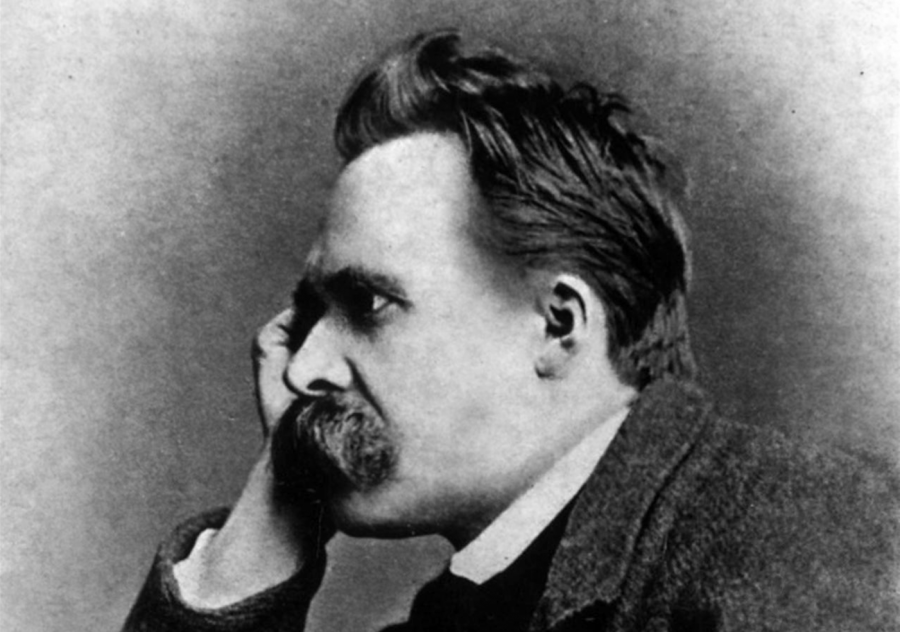
Art and About
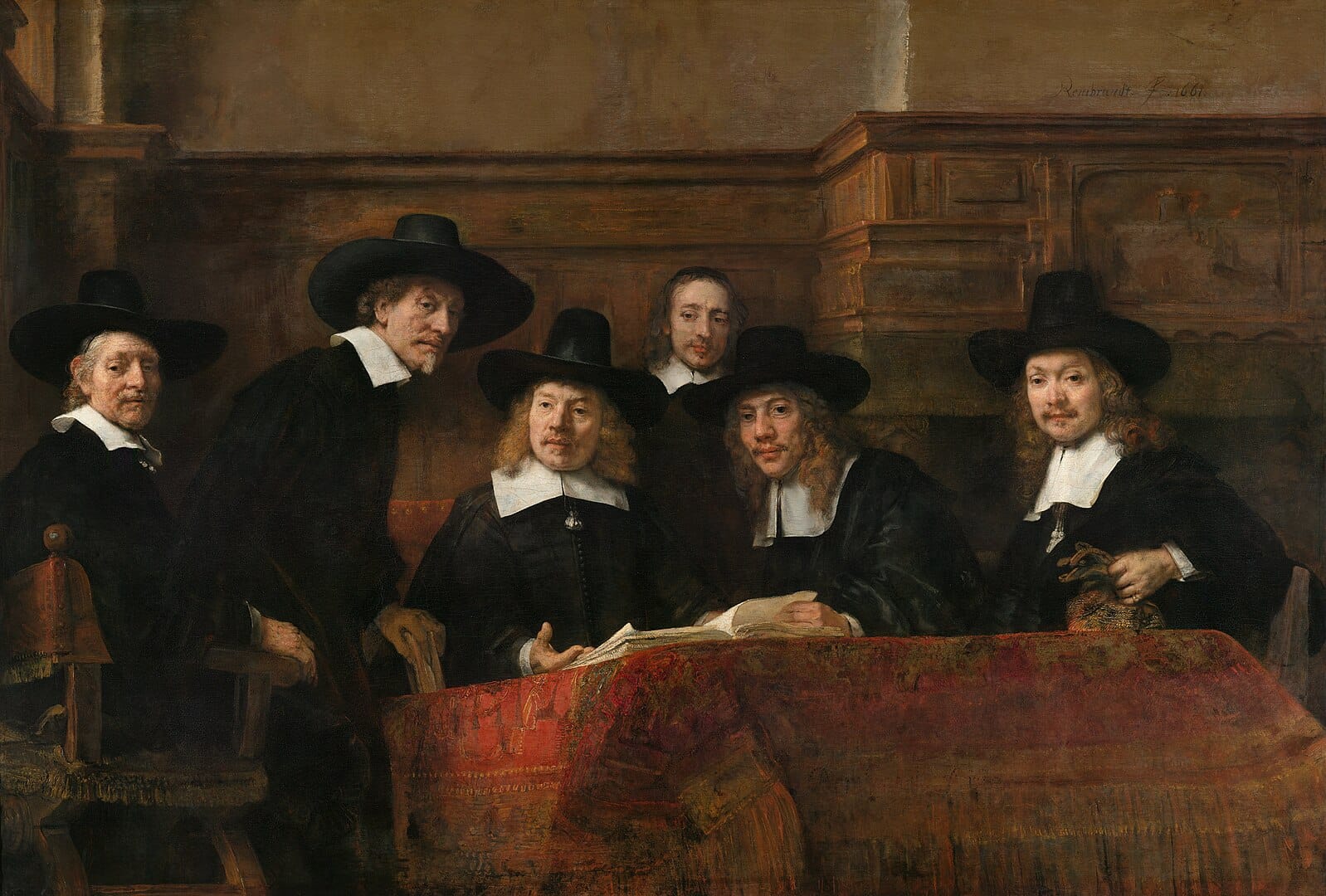
Artist: Rembrandt (1606–1669).
Title: Syndics of the Drapers' Guild
Description: Few paintings capture the essence of judgment better than Rembrandt's depiction of Amsterdam's drapers' guild examining dyed cloth. Five men and a clerk lean toward the viewer, caught in the exact moment of deliberation. Their posture is not adversarial, nor credulous; it is evaluative. They are weighing, discerning, comparing.
In an age where leaders increasingly defer to processes or models, Rembrandt's officials remind us that judgment is a human act requiring presence, attention, and shared accountability. Their authority is visible not in robes or titles but in the seriousness of their appraisal.
Every leader should study this painting—not just for its artistry, but for its anthropology. It shows what authority looks like when exercised rather than performed.
Date: 1662
Medium: Oil on canvas
Dimensions: 191.5 cm × 279 cm
Trivia Answer
Trivia question: On this day in 1874, which future British Prime Minister was born—later known for his defiant wit, prodigious writing, and occasional ability to hold a nation together by sheer force of oratory?
Answer: Sir Winston Churchill.