

Hello, and welcome to this edition of The Scribbler. This month I peer beneath the polished surface of organisational life to uncover the silent dissonance between what we say, what we mean, and what we dare not admit. But first, a bit of trivia.
Trivia question: On this day in 2003, a fleet of Concorde aircraft were retired. From which airline? Answer at the bottom of this scribbling.
Dispatches from the Frayed Edge of Organisational Sanity
There's a moment in every leader's week—somewhere between the third strategy slide and the fifth meeting about employee engagement—when one thinks: surely, this isn't what leadership was meant to feel like.
And no, it's not. Leadership, if recent weeks have made anything clear, has become a theatre of the absurd: populated by oracles of optimism, avatars of purpose, and middle managers clutching culture decks like life vests on the Titanic. The organisation says it wants change, but only if the PowerPoint animations are smooth. It wants feedback, but only if it's phrased like a TED Talk and accompanied by a GIF.
In short, reality has been escorted from the premises.
This month's writing has been a modest attempt to bring reality back in.
Let's begin with the obvious: messaging has escaped orbit. In When Messaging Slips the Bonds of Reality, I explored how communication in many organisations no longer serves to inform, but to pacify. It's theatre. What once was a tool of clarity has become a cover for strategic drift, an exercise in what Ashforth and Gibbs described as "symbolic management." We issue statements about agility while organisational cholesterol clogs every decision point. We reassure staff about their future while quietly plotting restructuring under code names that sound like Cold War operations.
And like Baghdad Bob before them, the messaging mandarins press on, describing bold futures as metaphorical tanks roll down the high street.
But this is not merely a communications problem—it is a moral one. When leaders lose the ability (or the courage) to speak plainly, they also lose the ability to think clearly. Discernment—the forgotten virtue in leadership circles—is not a matter of speaking slowly while clasping your hands. It's about the difficult work of aligning words with truth. If you can't admit when a plan is off-track, when a culture is dysfunctional, or when an initiative is more ceremony than substance, then you're not leading—you're narrating. Poorly.
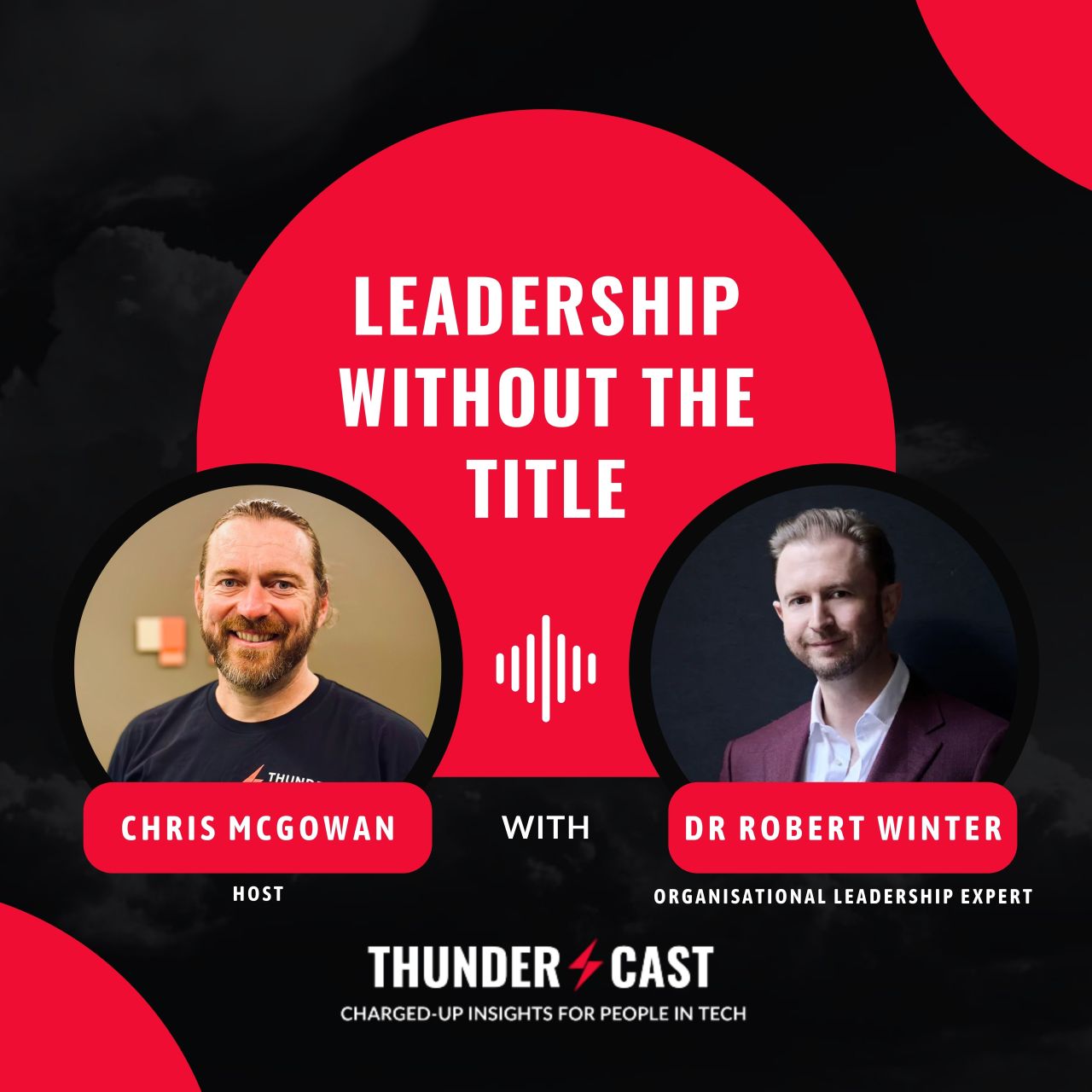
This brings me to the podcast I recorded with Chris McGowan: Leadership Without the Title. It struck a nerve, I think, because it named something many people instinctively feel but don't have language for—that real leadership doesn't always sit in the boardroom or C-suite. It is often found in the quiet work of those who create coherence, not chaos. Those who translate ambiguity into action, build bridges across silos, and say the uncomfortable thing when everyone else is nodding through nonsense.
In the episode, I called this 'discretionary boundary spanning'—those invisible acts of coordination and courage that keep the machine running long after the slogans have failed.
And here's the rub: if you want people to lead without the title, you have to give them the language to do so. That was the theme of Why Language is the Missing Link in Organisational Performance." Language is not just a medium of exchange; it is the architecture of shared action. Without it, teams devolve into silos, initiatives into turf wars, and strategy into pantomime.
I proposed a simple but powerful hierarchy of speech: expressive ("I'm frustrated with this project"), descriptive ("The project is behind schedule"), argumentative ("We should prioritise feature X because…"), advisory ("I think we should consider…"), and, at the top, promissory ("I will deliver the report by Friday"). What separates high(er)-performing leaders from garden-variety managers isn't their charm or even their knowledge—it's their use of language that binds action to responsibility. "I'll look into it" is not a promise. It's corporate white noise.
This linguistic drift explains why organisations can host countless town halls without surfacing a single insight. Everyone's talking, but no one is saying anything that compels reflection or incites responsibility. Noble language—the kind that enables commitment, accountability, and recognition—is in short supply. In its place: platitudes.
Of course, this performative layer of language becomes especially toxic when wielded by leaders who are themselves the problem. Which brings us, with only mild trepidation, to Conscience, Cynicism, and the Cultivation of Toxicity in Organisations.
Now, let's be honest: toxic leadership has had more comebacks than ABBA. We keep thinking we've evolved past it—what with all our values statements, safe spaces, and wellbeing apps—but then along comes another tyrant with a pitch deck, weaponising KPIs and holding forth on trust while breaking it in real time. What's worse, organisations don't just tolerate these people. They often promote them. Why? Because they 'get results'. Never mind that those results often come by extracting any remaining shreds of dignity from their team.
Yet, toxicity is not a flaw in the system—it is a feature of it. Toxic leaders thrive in cultures where metrics matter more than meaning, where psychological safety is an afterthought, and where accountability is something inflicted, not modelled. They survive because organisations confuse volume for vision, confidence for character, and permit all this to happen 'offline' where the light of reason and deliberation are never permitted to shine.
And when toxicity wins, what follows is silence.
Which leads us to the most quietly reforming piece of the month: Stacking Experience. A meditation on careers, yes, but also a reckoning with the metaphors we use to describe them. The popular language of 'career pivots' has, I think, done serious harm to how we value experience and by extension—people. It suggests that each move requires a reinvention, a blank slate, a performative forgetting of all that came before.
But experience doesn't pivot—it accrues. Or at least, it should. Like a geological stack, our professional lives layer over time: each role, each failure, each unexpected success, builds upon the last. To treat it otherwise is to flatten a person into a skillset and erase the judgement forged in ambiguity, the wisdom born of conflict, the moral muscle built through reflection.
This is especially damaging for those who don't conform to linear career paths—women, migrants, older workers, and anyone else whose stack of capabilities does not come wrapped in conventional packaging. When people say 'pivot', what they often mean is 'start over'. And that is both unwise and unethical.
Here's the thread which runs through all of this month's work: truth matters, but so does language. The rhetoric of leadership—be it about messaging, experience, or strategy—shapes whether people feel seen, heard, and respected. Or whether they feel like actors in someone else's performance.
When language becomes disconnected from reality, when leadership becomes a performance, and when culture becomes a theatre of slogans, what's lost is not just trust—it's conscience. And if the late Pope Francis is right, conscience isn't a set of rules—it's the ongoing work of discernment: to name what's real, to resist the inertia of falsehoods, and to choose language that liberates rather than conceals.
So, here's my invitation to you, as May recedes and the second half of the year looms:
- Lead without the title.
- Speak with noble clarity.
- Stack your experience with pride.
- And for heaven's sake, stop announcing that everything's fine when the organisation is clearly on fire.
Yours in structured dissent,
Dr Robert N. Winter
More of what you are missing?
Get weekly articles and monthly dispatches that help you to think critically and be better informed.
Worth Your Time
Art and About
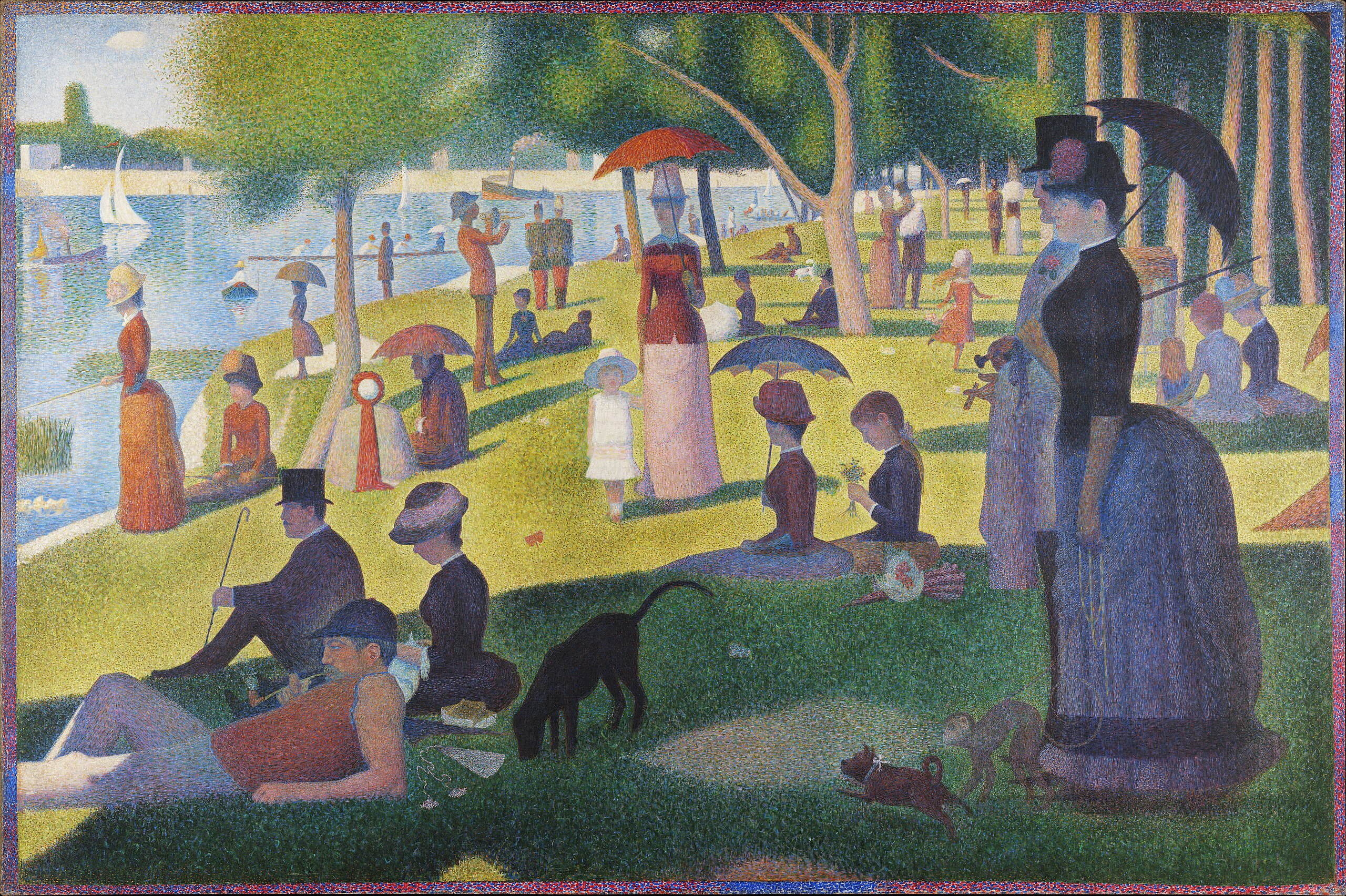
Artist: Georges Seurat (1859–1891).
Title: A Sunday Afternoon on the Island of La Grande Jatte (Un dimanche après-midi à l'Île de la Grande Jatte).
Description: In A Sunday Afternoon on the Island of La Grande Jatte, Seurat presents a shadowed mirror to his earlier sun-drenched Bathers at Asnières, offering not merely a pastoral scene but a quietly radical meditation on class, modernity, and social performance. Each figure, immaculately posed and cast in shadow, becomes part of a choreographed procession—an echo of the Parthenon frieze recast in bowler hats and bustles. Beneath the calm surface lies a world of coded gestures: fishing rods hint at transactional intimacy, pet monkeys and stiff soldiers at the absurdity of bourgeois ritual. And in the centre, a lone girl in white stares out—not passive, but piercing—her gaze seeming to ask whether the viewer will remain part of this orderly theatre or join the sunlit future just across the river.
A Sunday Afternoon on the Island of La Grande Jatte by Georges Seurat (1859–1891) is is licensed under Public Domain.
Trivia Answer

Trivia question: On this day in 2003, a fleet of Concorde aircraft were retired. From which airline?
Answer: Air France.