Doug Belshaw has given a name to something most of us have been circling for years. Writing at Open Thinkering, he calls it literacy-slop, and defines it briskly:
Literacy-slop is the credential without the community of practice; it’s the qualification without the learning; the skills certificate for getting an AI agent to click through a self-paced module on digital skills. It looks like literacy, satisfying the classifier. But it’s just curation without a social body.
He is writing about education. I want to take the idea somewhere it bites harder, because the business version of this problem costs more and is better hidden. In education, the person holding the hollow credential is usually the one who paid for it. In an organisation, the person holding it has been appointed to something on the strength of it, and someone else pays.
The Conference Convert
I have watched this happen more than once, and the shape is always the same.
An executive attends a conference, or sits through a roundtable, and encounters a framework. It is a good framework. Let us say it is PRINCE2, which is genuinely excellent when applied to the kind of work it was designed for—defined scope, stable requirements, a governance structure that actually allows rubber to hit the road. The executive returns converted. Within a quarter, the framework is not a tool in the organisation’s toolbox. It is the toolbox. Budget is redirected toward certification. Job advertisements acquire a new mandatory line. And a quiet reordering begins, in which people who hold the certificate advance and people who do not are quietly left where they are—or even moved out.
The damage is not that a bad method was adopted. It is that a good method was asked to do work it was never designed for, and that the organisation acquired a new and very crude instrument for sorting its own people. The executive, who did not understand the discipline well enough to know what else was in the toolbox, could not see what was being discarded. What was being discarded, generally, was experience—the twenty-year practitioner who has run more projects than the trainer has, who knows exactly when the method helps and when it produces a beautifully governed disaster, and who now finds that this knowledge does not fit in the box on the form.
It is the logic by which Charles Darwin (1809–1882), having never held a position at a major zoo, would not have made the shortlist.
I do not raise this to be clever about it. The executive was not stupid and was not acting in bad faith. They were doing the entirely rational thing that people do when they must make a judgement in a field they cannot personally assess: they reached for the most legible signal available. This is, in the economist’s sense, precisely what a signal is for. Michael Spence described the mechanism half a century ago—where a buyer cannot directly observe the quality they are purchasing, they fall back on a costly, visible marker that correlates with it, and the market reorganises around the marker (Spence, 1973). A certificate is comparable across candidates, defensible at an appointment committee, and auditable afterwards. Judgement about whether someone can actually do the work is none of those things.
The difficulty, as Randall Collins argued in his study of credentialism, is that markers of this kind inflate. They expand to track demand for position rather than the difficulty of the work, until the certificate records little beyond the fact that a fee was paid and a process endured (Collins, 2019). Given a choice between a proxy you can defend and an assessment you cannot, most people choose the proxy, and the organisation slowly reorganises itself around whatever the proxy happens to measure.
What Taste Actually Means
The philosophical bones of this are older than they look, and I should declare an interest before I use them: my doctoral work was on Edmund Burke (1729–1797) and the delegation of authority (Winter, 2023), which means I have spent more time than is strictly healthy on the question of what a person must possess before you can sensibly hand them something to do.
In 1759 Burke added an essay on taste to the second edition of his Philosophical Enquiry (Burke, 2015). Taste, in the eighteenth-century sense, has nothing to do with liking the right wine. It means the trained capacity to tell better from worse in a field you know well. Burke’s argument has two halves and both matter here.
The first half is egalitarian, and more so than his critics usually allow. The underlying faculty, he insists, is common to everyone—high and low, learned and unlearned. Nobody is born without it. What differs between people is not the equipment but the use to which it has been put. Bad judgement, he says, is not usually stupidity. It comes from a want of proper and well-directed exercise.
Sit with that phrase for a moment, because it is this whole series in five words. Proper and well-directed exercise. Not exposure. Not attendance. Not completion. Exercise, of the right kind, aimed in the right direction, over time.
The second half is the uncomfortable one. If the difference between good and poor judgement is exercise, then judgement is built the way fitness is built, and it can be neither transferred nor purchased. David Hume (1711–1776), writing two years earlier, put the standard of taste as sense improved by practice and perfected by comparison (Hume, 1987). Note that both men reach for verbs. You do not have judgement. You do it, repeatedly, usually in front of someone who will tell you when you have got it wrong, until one day you notice that you are getting it right more often than you used to. Gilbert Ryle (1900–1976) later made the grammatical version of the same point: knowing how is not a species of knowing that, and no quantity of the second ever adds up to the first (Ryle, 1988).
You do not have judgement. You do it, repeatedly, usually in front of someone who will tell you when you have got it wrong.
Nothing about a two-day course is capable of delivering this, and nothing about a certificate is capable of certifying it. This is not a criticism of courses. It is a statement about what kind of object a certificate is. A certificate records that a person completed a defined process to a defined standard on a defined day. That is a genuinely useful thing to record. It is simply not the same thing as the capacity to exercise judgement in your organisation, on your problems, with your constraints—and the gap between the two is invisible on a CV.
Leesa Wheelahan and Gavin Moodie have made the sharpest version of this case in the education literature. Micro-credentials, they argue, are built from units of competence: discrete, assessable, employer-legible fragments, deliberately detached from the disciplinary structure that once gave them meaning (Wheelahan & Moodie, 2021). The fragment is portable precisely because it has been cut loose from everything that explained why it mattered. They call the result gig qualifications for the gig economy, and reach for Sydney’s Hungry Mile to describe the labour market it produces—a queue of people holding tokens, hoping today’s token is the one being called (Wheelahan & Moodie, 2022).
Australia has been unusually energetic here, and the sequence repays attention. The 2019 review of the Australian Qualifications Framework concluded that using ‘highly generic graduate outcome statements to define and differentiate qualification types is not meaningful’, given the range of qualifications and the contexts in which they are delivered (Department of Education, 2019, p. 9). A reasonable finding, and a brave one. The review then asked whether shorter form credentials ought to become AQF qualification types in their own right, and the sector said no—they vary too widely in scope and complexity to sit at any single level, the compliance burden would be considerable, and meeting it would blunt the speed that makes them attractive in the first place (2019, p. 58). What was recommended instead was a set of guidelines for recognising them for credit and for aligning them to an AQF band (2019, p. 14).
The National Microcredentials Framework followed in late 2021 and did the defining work. A microcredential is a certification of assessed learning or competency with a minimum volume of learning of one hour (Department of Education, Skills and Employment, 2021, p. 9). Providers must disclose fifteen things about it, including the price, the delivery mode, the assessment method, and the learner effort itemised into face-to-face hours, synchronous online hours, peer-to-peer hours, reading hours and hours spent on assessment (2021, pp. 12–14). Eight further elements are merely recommended, and depth of learning is among them—the mastery a learner actually reaches. Where a provider chooses to state it at all, the framework permits a best-fit or an estimate, placed against the Dreyfus model of skill acquisition (Novice, Advanced Beginner, Competent, Proficient, Expert) (2021, pp. 14, 18).
Read that ordering again, because it is the whole problem in miniature. The hours are compulsory. The mastery is optional, and may be guessed. We diagnosed vagueness about what qualifications produce, and prescribed precision about everything except how good you end up being.
The Case for the Short Course
Here I need to be careful, because the argument I have just made is one short step away from an argument I do not hold.
I am not defending the three-year degree as such, and I am certainly not suggesting that short-form learning is inferior by nature. Some of the most capable people I have worked with do almost all their current learning in short courses, and do it superbly. The pattern is consistent enough to describe.
Consider a data scientist I have in mind—a composite, but a fair one. She holds a doctorate, or a research masters, and behind it sits the slow work: years of being wrong in front of a supervisor who noticed, of defending a position and losing, of discovering that her elegant model did not survive contact with the data. That work is finished and does not need repeating. What she does now is take a fortnight’s course on a new framework roughly every quarter, and she extracts more from it than most people extract from a semester.
She can do this because the course lands inside a practice that is already running. She knows which course to take, which is itself a judgement that required the earlier training. She can tell when the instructor is overselling. She can hold the new technique against fifteen years of cases and see immediately where it will break. And when the course teaches her something that is wrong—which happens constantly, because the field moves faster than the curriculum—she notices, and discards it, and nobody has to tell her.
In this context the short course is not the problem. It has never been the problem. What she is doing is topping up a tank. The failure mode is what happens when an organisation mistakes the top-up for the tank, and sends someone who has no tank at all on the same two-week course, and reads the resulting certificate as evidence that the tank is now full.
That is the distinction this whole series turns on, and it is a practical one. The question to ask about a course is almost never whether the course is any good. It is whether this person has a practice for the course to land in—and if they do not, what we are actually doing about that, as opposed to what we are doing about the gap on their file.
A certificate certifies that a process was completed. Whether judgement was formed is a separate question, and in most organisations nobody is asking it, because the certificate arrived and the file is now tidy.
In the next essay I take up what happens once the file is tidy and somebody has been appointed—promoted, moved sideways in a restructure, or hired in on the strength of the document itself. The evidence on all three is bleaker than most executives expect, and the bleakest concerns the candidate with the best paperwork.
Good night, and good luck.
References
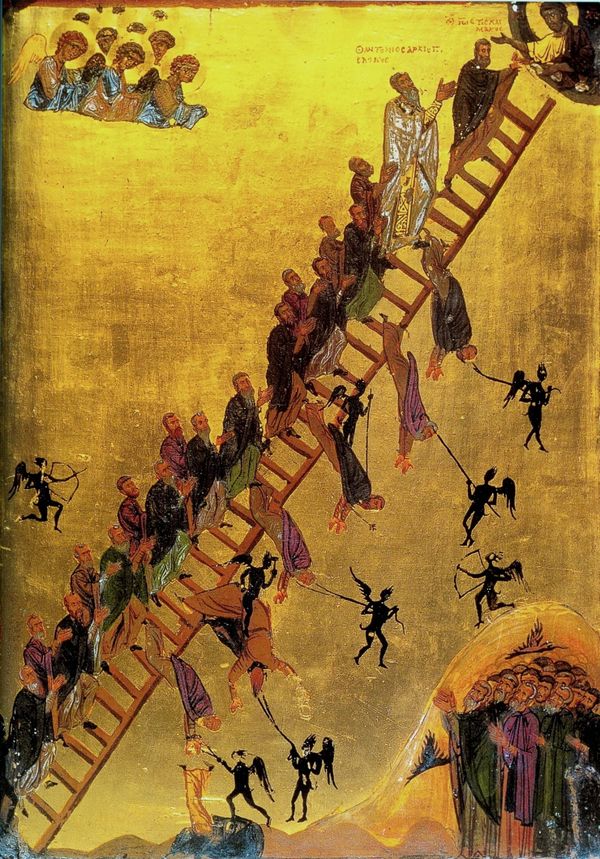
The Ass at School by Pieter Bruegel the Elder (c. 1525–1569) is licensed under Public Domain.