


About this conversation
For nine years the executive conversation about artificial intelligence has grown steadily louder, and the measured return on it has not moved. The comfortable explanation is that the technology was oversold. The more demanding explanation — and the one this conversation works through — is that we have not yet done what a general-purpose technology has always required of the organisations that adopt it: the slow, unglamorous work of building the human capability to use it well.
Electricity took the better part of forty years to show up in the productivity figures, because the factory had to be rebuilt around the motor before the motor paid for itself. My guest's claim is that the same is now true of artificial intelligence, and that the complement in question is not software but judgement — which cannot be bought, prompted into existence, or acquired at the pace the market would prefer.
In this conversation
- A flat productivity number is not proof the technology was oversold. It is what a general-purpose technology looks like before the complementary investment has been made — and that defence is only honest if the investment is actually happening.
- The models are a near-substitute for fluid intelligence — quick recall, fast synthesis. They are no substitute at all for the crystallised kind, which is accumulated rather than retrieved.
- Judgement is earned, not learned. It is cumulative and cannot be compressed into a prompt library, however comprehensive.
- Executives do not give up at the difficult foundations of learning a new tool. They give up in the middle — at the dialectic — and leap straight to holding forth about something they have not learned to think with.
- Most AI-attributed layoffs are ordinary corporate inefficiency wearing a fashionable excuse.
- Friction should be designed into the workflow on purpose. A system may be permitted to draft anything, and trusted to send nothing.
- The instrument in question is a language model. Which means the humanities are not adjacent to this problem. They are the discipline it most requires.
A thought to sit with
Further Reading
- Ajay Agrawal, Joshua Gans & Avi Goldfarb, Prediction Machines (2018) — on why cheap prediction makes judgement the scarce good.
- Paul A. David, "The Dynamo and the Computer" (1990) — on why a general-purpose technology's return always arrives late.
- Michael Polanyi, The Tacit Dimension (1966) — on the limits of what can be told rather than shown.
The guest
Jay Fontanini spent three decades in insurance analytics, pricing and growth before turning to building. He now runs the AI Executive Accelerator, a programme for insurance executives modelled, without irony, on the structure of the medieval trivium — on the principle that a stage skipped is a capability never actually acquired, however fluent the performance that follows.
 Dr Robert N. Winter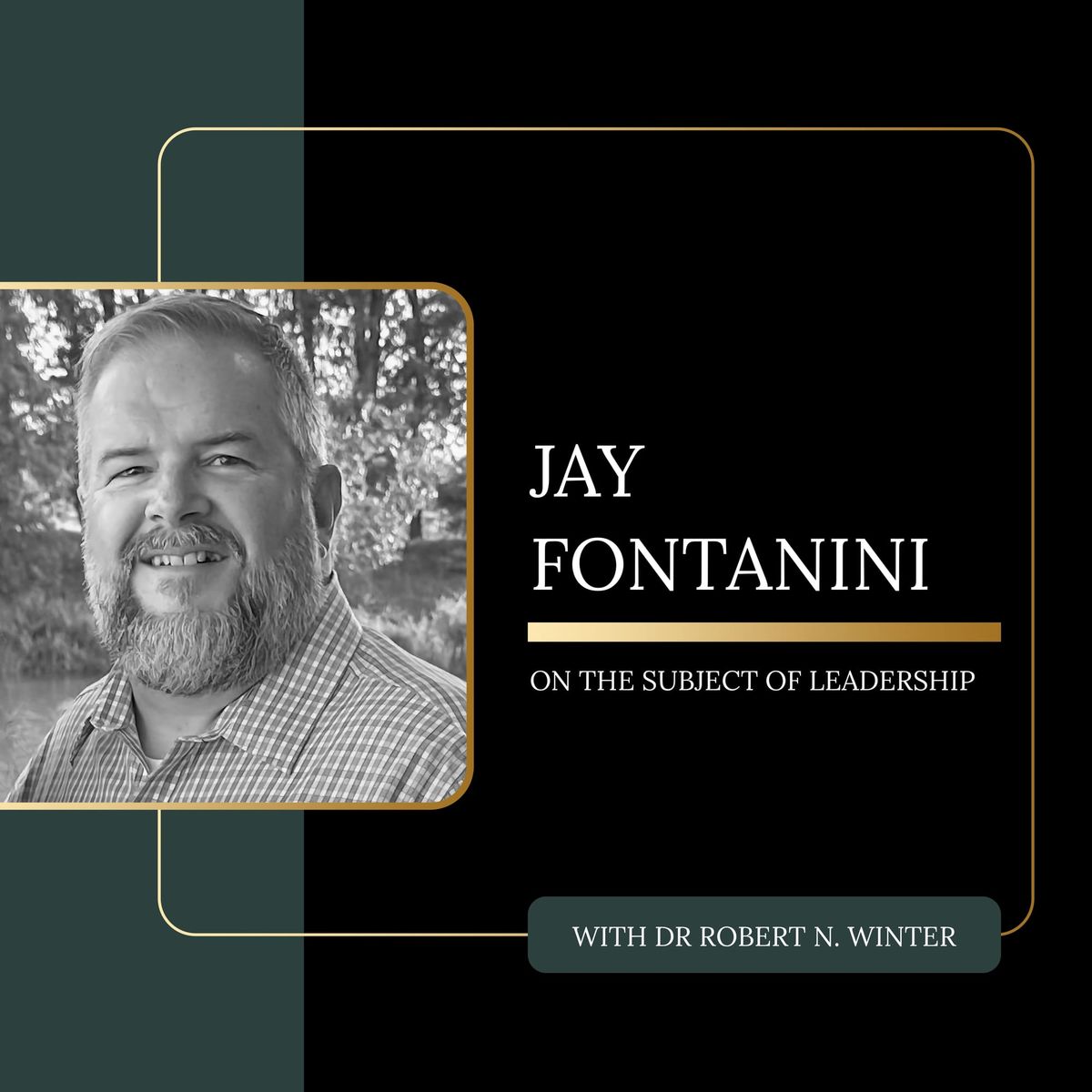


Member discussion
The discussion is open to members of the Commons. Join, free, or sign in to take part.