
Doing Less with More
My guest this week is Tim Newbold, founder of OKR Quickstart, who has spent a decade watching goal-setting frameworks meet real organisations, and who argues that when they fail, the fault is almost never in the framework.
On how organisations are built, changed, and quietly undone by their own structure.
My guest this week is Tim Newbold, founder of OKR Quickstart, who has spent a decade watching goal-setting frameworks meet real organisations, and who argues that when they fail, the fault is almost never in the framework.
My guest this week is Pamela Wyatt, Head of Business Transformation for Asia-Pacific at DT Global, who spent nearly a decade at the Asian Development Bank negotiating governance reform with Pacific governments.
My guest this week is David Harvie, Director of Wholesale Distribution at AUSIEX, a wholesale broker serving financial advisers and institutions, and the founder of DADBODZ, a health venture for time-poor fathers.
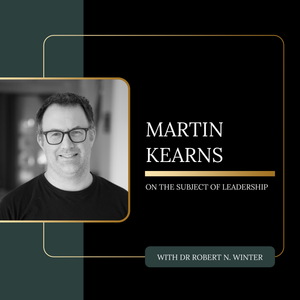
What happens when a movement built on autonomy becomes a system of rituals? In this episode of On the Subject of Leadership, I speak with Martin Kearns—one of the
Flat organisations are usually presented as a philosophy. More often they are a headcount. The literature on networked teams and post-hierarchical work is written, almost without exception, from firms
Once the capability gap is closed, instead of feeling fear and frustration about not knowing how to perform a role or achieve an outcome, staff are empowered to deliver value and be rewarded for their achievement.
In an era of heightened employee mobility, hybrid work environments, and a skills shortage, the idea of matching great talent with critical roles may not be new, but it is more essential than ever.
The challenge for managers is that we are no longer comparing apples with apples. Instead, we must leverage the power of personas to better understand the individuals that make up our teams.
While the overall numbers of people affected by mental health issues is a cause for concern, perhaps as alarming are the number of firms or individual managers who engaging in well-being washing.
By tackling some of the common problems, teams and organisations will be well placed to achieve aspirational efficiency objectives. When this happens, we can get one of those virtuous circles in which the approach sticks and compounds over the years.
This approach yields good, if imperfect, OKRs while advancing real management: pushing teams beyond comfort to learn, improve, and explore—driving meaningful transformation and unlocking organisational value.
No fixed set of actions can define, measure, or achieve success. Thus, trying to make transformation a tick box affair is to setup an organisation for failure. This is because successful transformation is as much about the process as it is about the outcome.
Managers often fail to build autonomous teams,keeping themselves in a job to solve for problems which should have long since been put behind the organisation.
The value of a WIP is to discuss and monitor results. Unpacking how the outcomes of work relate to the organisation's strategic goals.
An interview is a crossroad, one at which you are making a choice between merely seeking a job and wage or using the opportunity to grow a career.
When PI Planning is deployed by leaders who have the nuance, skill, and strategic capability to deliver an Agile project with a multi-year roadmap, PI Planning is an invaluable framework for program delivery.
These are words we use often in an organisational context, but words that are seldom discussed; and when discussed, often done so opaquely or inaccurately.
Sit with ambiguity, but be aware of when a seemingly circular conversation is enhancing a definitional understanding and when it is just a group of individuals unable to comprehend ambiguity hoping that a drawn out conversation will nail down the problem.
Freeman Dyson famously wrote that “A good scientist is a person with original ideas. A good engineer is a person who makes a design that works with as few ideas as possible. There are no prima donnas in engineering.”