
Doing Less with More
My guest this week is Tim Newbold, founder of OKR Quickstart, who has spent a decade watching goal-setting frameworks meet real organisations, and who argues that when they fail, the fault is almost never in the framework.
On how organisations are built, changed, and quietly undone by their own structure.
My guest this week is Tim Newbold, founder of OKR Quickstart, who has spent a decade watching goal-setting frameworks meet real organisations, and who argues that when they fail, the fault is almost never in the framework.
My guest this week is Pamela Wyatt, Head of Business Transformation for Asia-Pacific at DT Global, who spent nearly a decade at the Asian Development Bank negotiating governance reform with Pacific governments.
My guest this week is David Harvie, Director of Wholesale Distribution at AUSIEX, a wholesale broker serving financial advisers and institutions, and the founder of DADBODZ, a health venture for time-poor fathers.
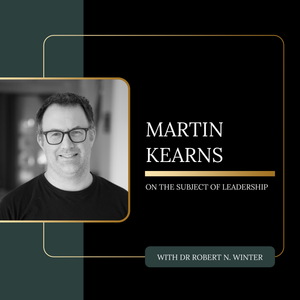
What happens when a movement built on autonomy becomes a system of rituals? In this episode of On the Subject of Leadership, I speak with Martin Kearns—one of the
Flat organisations are usually presented as a philosophy. More often they are a headcount. The literature on networked teams and post-hierarchical work is written, almost without exception, from firms
Authentic leadership builds trust through transparency, ethics, and empathy. Leaders who model authenticity create psychological safety, strengthen relationships, and foster resilient, innovative cultures that support lasting organisational success.
Rewarding effort can motivate, but overdoing it breeds entitlement, inefficiency, and burnout. Tying rewards to outcomes, strengthening intrinsic motivation, and favouring collective achievement helps balance effort with excellence and sustain a healthy organisational culture.
In 2024, leaders strengthened governance, culture, and decision-making through critical thinking and evidence-based practice. Lessons included avoiding sunk-cost traps, building cohesive cultures, and improving meetings.
Succession planning builds adaptable, emotionally intelligent leaders ready for complexity. It goes beyond replacing roles, pairing rigorous assessment with real growth. By developing latent talent aligned to organisational values, it secures future leadership and long-term success.
Succession planning must be cultural, not procedural. Pipelines grounded in organisational ethos—reinforced through mentorship and rotations—pass on tacit knowledge and identity. Transparent engagement builds trust, making leadership transitions fair, strategic, and resilient.
Succession planning sustains organisations by preparing for leadership transitions while protecting values and goals. It fosters equity, transparency, and cultural alignment, using mentorship and collaboration to balance stability with innovation and build resilient leadership systems.
Empathy strengthens leadership by building trust, respect, and belonging. It supports fairness, psychological safety, and better decisions. Though it risks burnout, empathy remains essential for ethical, resilient, and sustainable organisations.
Misused metrics distort behaviour, erode trust, and weaken goals. Used wisely—aligned with values, ethics, and systems thinking—they support better decisions and create environments where people and organisations can thrive.
FranklinCovey’s Leading at the Speed of Trust offers helpful tools but oversimplifies trust. A satisficing approach—grounded in practical action and shaped by culture and relationships—builds trust iteratively, supporting resilient, sustainable leadership.
Trust underpins leadership and shared purpose. FranklinCovey frames trust as measurable through behaviours like integrity and capability, boosting speed and lowering costs. Yet trust endures only when leaders also attend to relational and contextual realities.
Narrow Band Comprehension limits individual and organisational performance through selective understanding. Organisations can counter it by promoting broad engagement, holistic metrics, and governance-based accountability.
Organisational crises test leaders’ clarity, moral courage, and adaptability. Effective responses balance tradition and innovation, rely on clear hierarchies for swift action, and uphold ethical judgment to ensure resilience.
Gold of the Desert Kings is an engaging leadership simulation promoting strategy and teamwork under pressure, but its focus on competition overlooks emotional intelligence and ethics. Coupling it with formal leadership theory could yield deeper, longer-lasting learning.
Inclusive leadership goes beyond DEI by creating cultures where difference is valued and people are empowered. Grounded in empathy and practical wisdom, it avoids tokenism through transparency, mentorship, and dialogue. Used carefully, humour can strengthen inclusion and trust.
High-performing teams are built on trust, psychological safety, clear roles, open communication, and shared accountability. Classical insight and modern research agree: cohesion, collaboration, and a common purpose enable teams to adapt and perform under pressure.