
Doing Less with More
My guest this week is Tim Newbold, founder of OKR Quickstart, who has spent a decade watching goal-setting frameworks meet real organisations, and who argues that when they fail, the fault is almost never in the framework.
On how organisations are built, changed, and quietly undone by their own structure.
My guest this week is Tim Newbold, founder of OKR Quickstart, who has spent a decade watching goal-setting frameworks meet real organisations, and who argues that when they fail, the fault is almost never in the framework.
My guest this week is Pamela Wyatt, Head of Business Transformation for Asia-Pacific at DT Global, who spent nearly a decade at the Asian Development Bank negotiating governance reform with Pacific governments.
My guest this week is David Harvie, Director of Wholesale Distribution at AUSIEX, a wholesale broker serving financial advisers and institutions, and the founder of DADBODZ, a health venture for time-poor fathers.
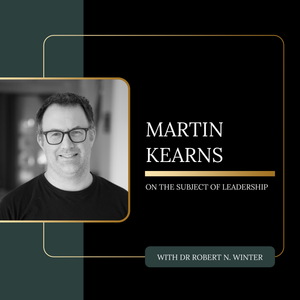
What happens when a movement built on autonomy becomes a system of rituals? In this episode of On the Subject of Leadership, I speak with Martin Kearns—one of the
Flat organisations are usually presented as a philosophy. More often they are a headcount. The literature on networked teams and post-hierarchical work is written, almost without exception, from firms
Adaptive leadership distinguishes technical problems from adaptive challenges that require learning and experimentation. It emphasises situational awareness, engagement, and shared leadership while preserving purpose and ethics, preparing organisations for change beyond reactive or static models.
Karl Popper's theory of falsification provides a powerful framework for modern leadership. By embracing the principles of falsification, leaders can foster innovation, agility, and resilience in their organisations. This also allows the evolution of our understanding by discarding theories that do n
True strategy requires deep analysis, clear choices, alignment, and continuous learning. Leaders must avoid vague goals and instead create actionable, coherent plans that drive real value and competitive advantage in a complex business environment. A case study of IKEA shows how this approached was
Much of what passes for "strategy" is platitude dressed as direction. A real strategy is specific, actionable, and tied to organisational goals. The difference is rigorous analysis and the willingness to make hard choices.
Organisations often reward conformity over innovation. Nvidia CEO Jensen Huang’s rejection of traditional 1-on-1s in favour of public feedback highlights the need to rethink communication, especially in remote and hybrid workplaces, to boost transparency, learning, and adaptability.
A custodian mindset in management prioritises stewardship over control. It supports autonomy, ethical leadership, sustainable resources, and agility through empowerment, transparency, learning, and clear ethical frameworks.
In workplaces that reward busyness, activity often replaces real productivity. Non-essential work drives exhaustion, not value. Time boxing, prioritisation, and delegation help refocus effort on meaningful work, improving effectiveness, creativity, and well-being.
“They don’t know what they don’t know” captures a core leadership risk. Unaware managers make poor decisions and damage morale. Organisations that embrace learning, critical thinking, and ethical judgment build more resilient and just systems.
Working with excellent colleagues is energising; managing poor performers is not. Incompetence, gaming, and legal barriers make dismissal costly, harming high performers. Strong performance management demands clarity, documentation, and strategic discipline to protect organisational integrity.
In planning, hope often crowds out critical thinking as leaders chase the next project as the imagined fix. Seen in publishing’s “green awning effect,” this bias favours new ideas over hard lessons from history. Better strategy comes from learning what already failed.
The first in a series on learning from history and its value for organisational decision-making. Today, those who draw lessons from the past risk being labelled “on the wrong side of history,” much as dissenters in business face exile for challenging dominant narratives.
This week I examine how AI improves the polish of business writing while obscuring weak logic. As decisions often rely on form over substance, AI can legitimise flawed arguments. Leaders must read more critically and recognise AI’s limits and biases.
A fixed mindset breeds stagnation and toxicity; a growth mindset supports learning, collaboration, and innovation. But it isn’t blind optimism or effort alone. Real growth requires self-awareness, discipline, and balancing the fixed and growth impulses within us.
Inspired by *Kaizen*, incremental improvement unlocks latent potential by favouring small, continuous changes over quick wins. The 1% principle shows how steady progress compounds into significant long-term personal and professional gains.
Overconfidence distorts managerial decisions, fuelling poor strategy and ego. Shifting from prediction to preparation, grounding judgment in rational thinking, and valuing informed anecdote alongside data helps balance confidence with pragmatism and improves organisational outcomes.