

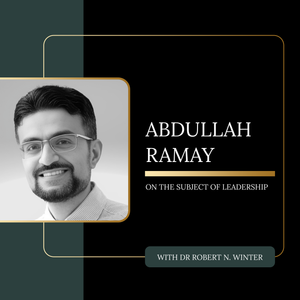
Abdullah Ramay: Purpose, Profit, and the Discipline of Coherence
What separates a commitment from a preference? A preference is what an organisation would like to do. A commitment is what it has arranged to be unable to stop doing.
On the ethical dimension of organisational life, where most decisions are made long before anyone gets around to calling them moral.
What separates a commitment from a preference? A preference is what an organisation would like to do. A commitment is what it has arranged to be unable to stop doing.
When corporate messaging detaches from operational truth, it becomes performative and ethically brittle. Leaders risk symbolic overreach, middle managers amplify unreality, and organisational silence sets in. The application of ethics and discernment offers a way to tether narrative to fact, reward
The Monty Hall paradox reveals a deeper truth about management: sticking with a failing strategy isn't brave—it's bad judgment. When new information changes the odds, smart leaders pivot. Whether it's dodging the sunk-cost fallacy or resisting the fear of looking inconsistent, knowing when to switch
Governance in Name Only (GINO) describes how corporations adopt superficial governance practices to appear ethical without meaningful accountability. Using scandals like Star Casino, I unpack why organisations succumb to governance washing, highlighting coercive, mimetic, and normative pressures, an
The blank slate approach to management is when managers indiscriminately challenge existing practices, leading to inefficiency, frustration, and a blame culture. Instead, organisations benefit from appointing competent, sensitive leaders who ask insightful questions, remove blockers, and respect org
Negotiators sometimes exploit offence to manipulate opponents, provoking anger or indignation to gain leverage. While this can yield short-term gains, it often damages trust and backfires. Historical figures like Napoleon and Churchill used calculated insults, while modern cases—Trump, Musk—demonstr
Rewarding effort can motivate, but overdoing it breeds entitlement, inefficiency, and burnout. Tying rewards to outcomes, strengthening intrinsic motivation, and favouring collective achievement helps balance effort with excellence and sustain a healthy organisational culture.
Innovation drives growth only when balanced with organisational, ethical, and cultural frameworks. Pursued without restraint, it can erode values and stability. Sustainable innovation respects tradition and long-term purpose.
Advances in LLMs show promise, but token bias undermines their logical reliability. Small input shifts can distort outputs, posing risks in fields like medicine, law, and policy. Their dependence on pattern recognition over true reasoning demands closer scrutiny and better design.
Leadership in the digital age requires balancing timeless qualities—wisdom, courage, empathy—with responsible use of technology. AI and data should support, not replace, ethical judgment and emotional intelligence as leaders guide people toward shared goals.
Inclusive leadership goes beyond DEI by creating cultures where difference is valued and people are empowered. Grounded in empathy and practical wisdom, it avoids tokenism through transparency, mentorship, and dialogue. Used carefully, humour can strengthen inclusion and trust.
Successful DEI comes down to balance—ensuring that belief doesn't descend into ideology. A process that is founded on the bedrock of psychological safety.
Because being off the grid is next to impossible in many societies, it is tempting to give up and proclaim 'I have nothing to hide'.
As Apple's privacy respecting posture gives way to the pull of marketing dollars through making user data the product, their third way begins to fall short.
You can join me in camp confusion or post using or not using CWs with a certainty that would make a prophet blush.
These are words we use often in an organisational context, but words that are seldom discussed; and when discussed, often done so opaquely or inaccurately.