
Doing Less with More
My guest this week is Tim Newbold, founder of OKR Quickstart, who has spent a decade watching goal-setting frameworks meet real organisations, and who argues that when they fail, the fault is almost never in the framework.
On judgement, authority, and the exercise of leadership—as distinct from management, and rarely as tidy as the literature pretends.
My guest this week is Tim Newbold, founder of OKR Quickstart, who has spent a decade watching goal-setting frameworks meet real organisations, and who argues that when they fail, the fault is almost never in the framework.
My guest this week is Pamela Wyatt, Head of Business Transformation for Asia-Pacific at DT Global, who spent nearly a decade at the Asian Development Bank negotiating governance reform with Pacific governments.
My guest this week is Professor Alistair Noble, President of Nan Tien Institute, a small independent higher education provider near Wollongong grounded in Buddhist values.
My guest this week is David Harvie, Director of Wholesale Distribution at AUSIEX, a wholesale broker serving financial advisers and institutions, and the founder of DADBODZ, a health venture for time-poor fathers.
My guest this week is Jay Fontanini, founder of the AI Executive Accelerator, who spent three decades in property and casualty insurance before turning to building software and teaching executives to think with it rather than perform having thought.
There is a familiar shape to the discussion of artificial intelligence in Australian enterprises. Adoption figures rise. Pilot counts rise. Licence spend rises. Somewhere in the annual report a paragraph
The leadership literature, and the organisations that consume it, share an unexamined assumption about direction. Progress means ascent. One begins as an individual contributor, demonstrates competence, and is rewarded with
Most conversations about corporate governance begin with structure—committees, charters, the machinery of oversight. This one begins on the side of a dirt road in Nepal in 1999, and I
Most conversations about artificial intelligence and the product manager begin by asking whether the role survives. This one begins somewhere more useful: by asking what the role was ever actually
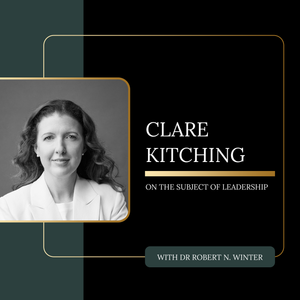
In this episode of On the Subject of Leadership, I speak with Clare Kitching, founder of Cambiq Consulting—formerly of McKinsey, QuantumBlack, and Treasury Wine Estates where she served as
What does it actually take for a strategic intent to survive contact with the business that must implement it? In this episode of On the Subject of Leadership, I speak
People accountable to a superior whose views they know tend to adopt those views. Nick Hassett on how accountability cultures manufacture silos, why agreement stops at the boardroom door, and why banning AI hides the risk rather than removing it.
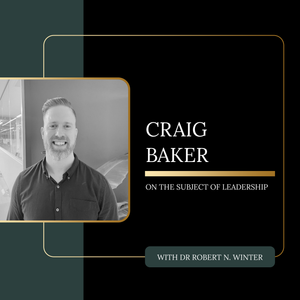
What happens when a leader who sold the vision steps back into the reality of delivering it? In this episode of On the Subject of Leadership, I speak with Craig
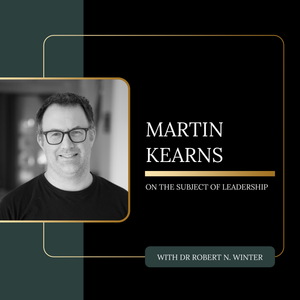
What happens when a movement built on autonomy becomes a system of rituals? In this episode of On the Subject of Leadership, I speak with Martin Kearns—one of the
What separates a commitment from a preference? A preference is what an organisation would like to do. A commitment is what it has arranged to be unable to stop doing.
Flat organisations are usually presented as a philosophy. More often they are a headcount. The literature on networked teams and post-hierarchical work is written, almost without exception, from firms
The Queen was an ever constant in a changeable and unpredictable world. Over seven decades, she was always there for us.
Those who rise to the top jobs, do so not because they are better leaders or have fewer blots on their copybook — it is because they are better able to shrug off criticism and weather the blistering attacks that are directed at all holders of public office.
Knowing this only shifts the problem from 'how' to 'when'. In other words, at what speed should the change management take place?
Bellowing preconceived ideas with ever increasing volume is seldom a path to organisational success and Vedic happiness.
Plato wrote of cardinal virtues and their importance in the character of a good city. It is tempting to pickup this theme in regards to leadership.
Pushing back on unorthodox views has given rise to 'wrongspeak,' 'the things we believe to be true but cannot say,' creating a Media Archipelago.
The notion that the 'significant symbols,' found in the harmony between the projected and received understanding of the gesture which transports meaning between employee and manager, are not fixed, but are subject to continual recreation allowing infinite flexibility when assessing project planning.
Variability in people leads to variability in the anticipated behaviour. In this context there is always a degree of unpredictability in behaviour.
In the postmodern age, we are surrounded by more heroes than in a Homeric epic, with football players, life guards and even movie stars being thrown into the mix.